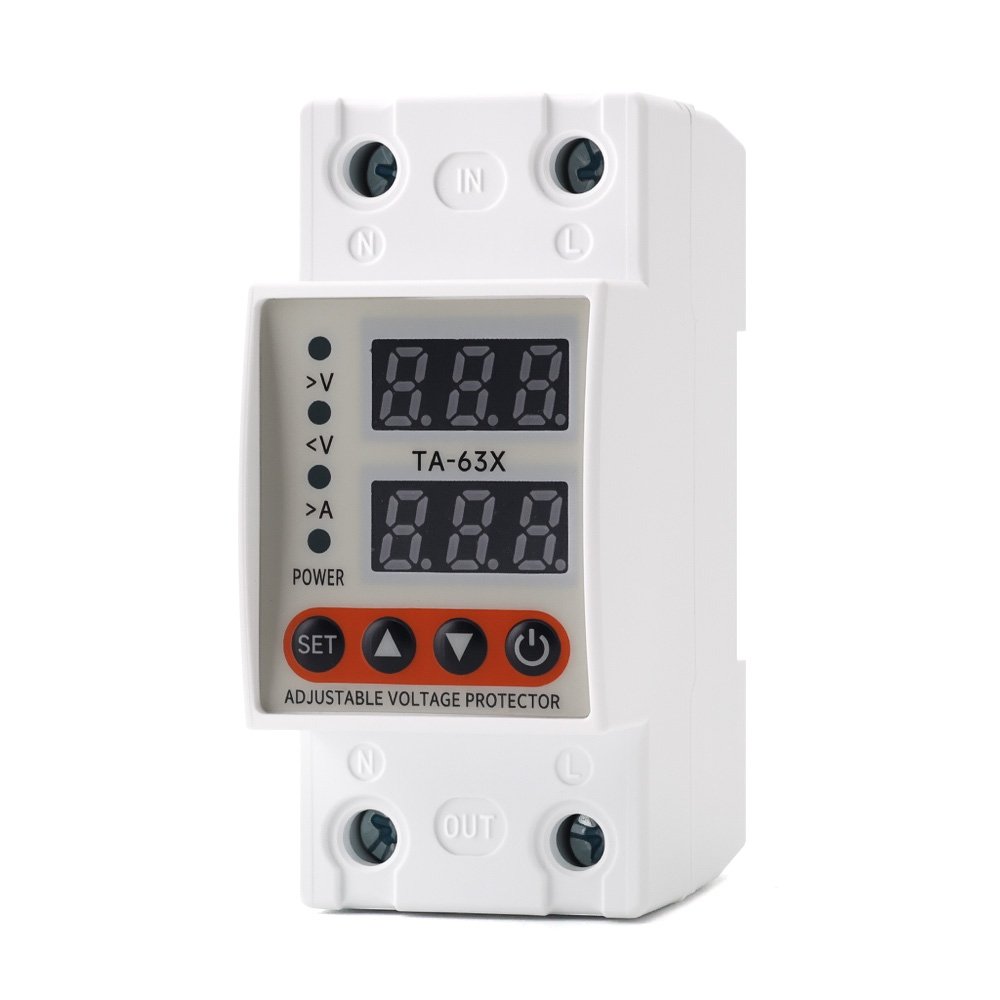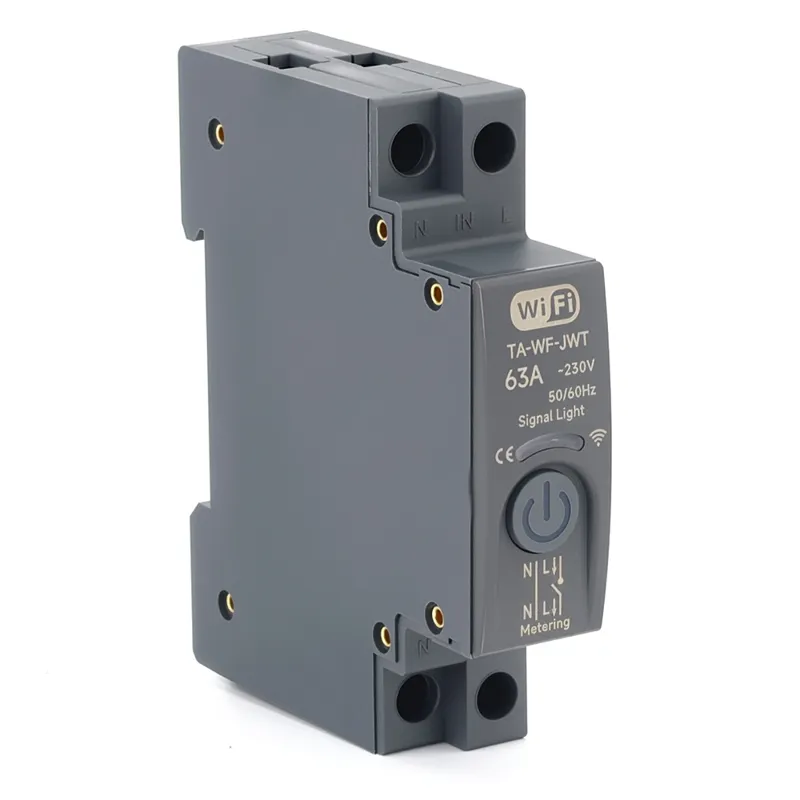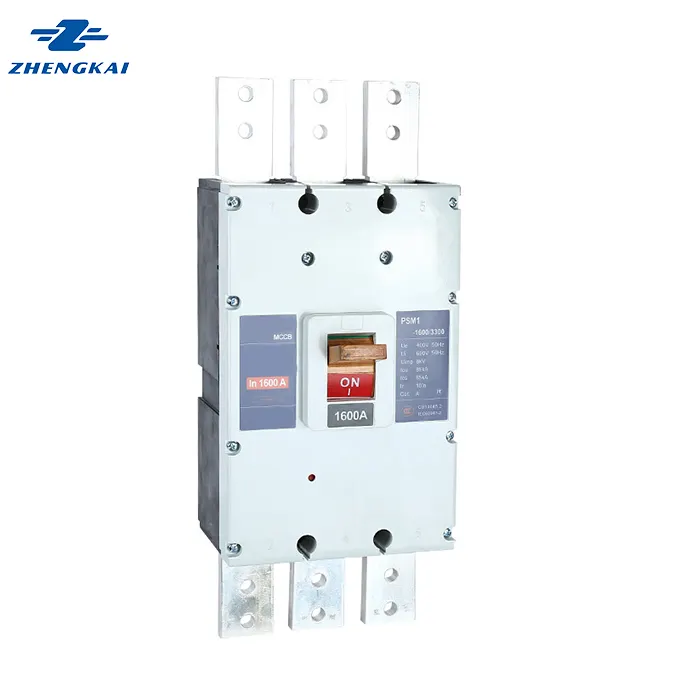
Have you ever had a motor “mysteriously” fail right after a busy production week? You’re not alone. Motors usually don’t die of old age—they die of stress. Motor protectors exist to spot that stress early and disconnect the motor before heat, current, or voltage issues turn into downtime, rewinds, and awkward conversations.
In this article, we’ll walk through how motor protectors work, what types you’ll see in real panels, and how to choose the right one for your application. We’ll keep it practical, because “it depends” is not a purchasing strategy.
What motor protectors do (and don’t) do
At a high level, motor protectors monitor conditions that commonly damage motors and act when something goes out of bounds. In most installations, “act” means tripping a relay or opening a circuit so the motor stops before it cooks itself.
What they typically protect against:
- Sustained overload (running above rated current)
- Locked rotor / stalled conditions
- Phase loss and phase imbalance (three-phase motors)
- Under/overvoltage (depending on model)
- Overtemperature (via PTC/RTD inputs on advanced units)
What they don’t automatically solve:
- Bad mechanical design (misalignment, oversized loads)
- Poor ventilation or high ambient temperature (they can react, but not fix)
- Power quality issues beyond their sensing range (harmonics, transients—unless you choose a model designed for it)
Think of motor protectors like smoke alarms: essential, fast, and effective—but they don’t replace good housekeeping.
The real-world faults that kill motors
If you’re evaluating motor protectors, it helps to map protection features to the failure modes you actually see. Here are the common culprits:
- Thermal overload: The motor draws a bit too much current for too long. Heat builds up. Insulation suffers.
- Frequent starts: Starting current is high by nature. Too many starts per hour can overheat the windings even if running current looks fine.
- Stall / jam: A conveyor jams, a pump seizes, or a fan ingests debris. Current spikes and stays high.
- Phase loss: One phase drops out, and the motor keeps trying on two phases. Temperature rises fast.
- Voltage problems: Undervoltage increases current for the same load. Overvoltage stresses insulation. Imbalance causes uneven heating.
If any of these sound familiar, your selection should prioritize overload characteristics, phase monitoring, and the right trip behavior for your start profile.
Types of motor protectors and where each fits
The “best” device depends on how critical the motor is, how variable the load is, and how much visibility you want in the control system.
Thermal overload relays (classic workhorse)
These are the familiar overload relays paired with contactors in motor starters. They’re cost-effective and reliable for many constant-load applications.
Best for:
- Simple DOL (direct-on-line) starters
- Predictable loads (fans, basic pumps)
- Panels where low complexity is a priority
Electronic / microprocessor motor protection relays
These are smarter motor protectors that measure current more precisely, model motor heating, and often add phase, voltage, and communications features (Modbus, digital I/O, event logs).
Best for:
- Critical motors where downtime is expensive
- Applications with frequent starts or varying loads
- Plants that want diagnostics and trip history
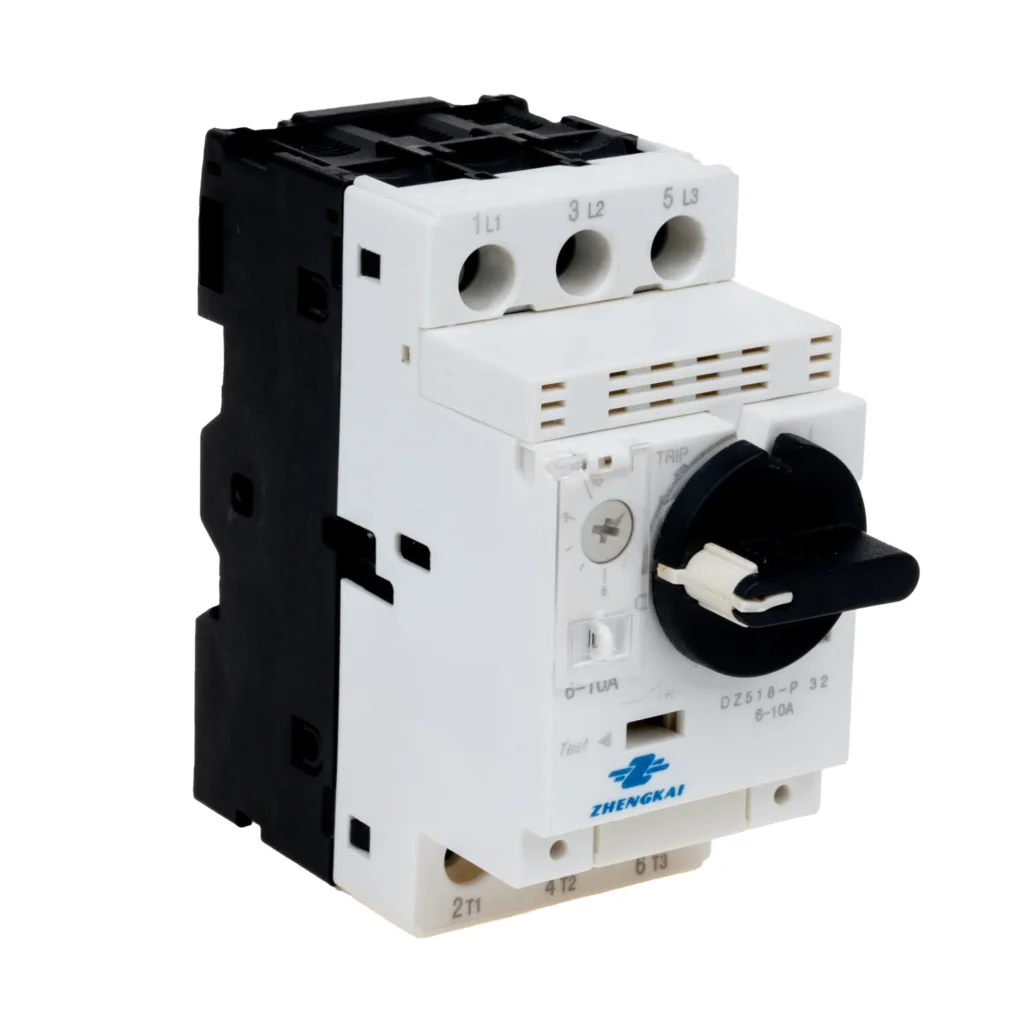
Motor protection circuit breakers (MPCB) / manual motor starters
These combine short-circuit protection and adjustable overload protection in a single device, often with a rotary handle. They’re popular in compact MCC buckets and skid panels.
Best for:
- Space-constrained panels
- Distributed equipment skids
- Quick local disconnect and reset
Single-phase motor protectors
Single-phase motors have their own pain points: voltage drop, start capacitor issues, and higher sensitivity to overload. Dedicated motor protectors for single-phase loads may include under/overvoltage and restart delay to prevent rapid cycling.
Best for:
- Small pumps, HVAC equipment, light-duty machinery
- Remote sites where voltage is unstable
| Type | Strengths | Trade-offs | Typical applications |
|---|---|---|---|
| Thermal overload relay | Simple, proven, affordable | Limited diagnostics | Fans, basic pumps, conveyors |
| Electronic protection relay | Advanced protection + data | Higher cost, setup needed | Critical pumps, compressors, process motors |
| MPCB/manual starter | Compact, integrated switching | Feature set varies by model | Skids, MCC feeders, packaged machines |
| Single-phase protector | Voltage/restart safeguards | Not for three-phase motors | HVAC, small pumps, utilities |
Key specifications that actually matter
When comparing motor protectors, spec sheets can feel like alphabet soup. Focus on the handful of parameters that directly affect protection quality and nuisance trips.
Current range and adjustability
You want a device whose setting range comfortably covers the motor’s nameplate current (FLA). Too close to the edges can reduce accuracy.
Trip class (start behavior)
Trip class (often called Class 10, 20, 30) indicates how long the device allows elevated current during starting before it trips. Longer starts (high inertia loads) need a higher class.
Phase and voltage monitoring (three-phase)
If you’ve ever lost a motor to phase loss, you already know this is worth it. Look for:
- Phase loss detection
- Phase imbalance thresholds
- Under/overvoltage alarms or trip
Coordination and fault ratings
In industrial panels, you’ll also care about coordination with fuses/breakers and short-circuit current rating (SCCR). This is especially important if the motor feeder sits on a high available fault current bus.
| Specification | Why you care | Practical tip |
|---|---|---|
| Adjustable current setting | Matches motor FLA and reduces nuisance trips | Set to nameplate FLA unless the OEM recommends otherwise |
| Trip class | Prevents trips during normal starts | Use higher class for high inertia loads |
| Phase loss/imbalance | Stops “two-phasing” damage | Strongly consider for three-phase motors |
| Under/overvoltage | Protects against unstable supply | Helpful in remote sites and weak grids |
| SCCR/coordination | Safety and compliance in fault events | Verify with your panel SCCR design |
Smart features worth paying for
Not every motor needs a brain. But for the motors that matter, smarter motor protectors can cut troubleshooting time dramatically.
Useful “smart” capabilities include:
- Thermal model memory: Remembers motor heating between starts (helps prevent rapid restart damage).
- Event and trip logs: Shows whether you tripped on overload, phase loss, or undervoltage.
- Communications (e.g., Modbus): Sends alarms to SCADA/PLC and supports remote reset policies.
- Condition indicators: Current unbalance trends, start time trends, and overload margin.
If your maintenance team is currently diagnosing trips with “it probably overheated,” smart logs can pay for themselves quickly.
How to size and set a motor protector without guesswork
Here’s a simple workflow we use to select and configure motor protectors with fewer surprises:
- Collect the nameplate data: FLA, voltage, phase, frequency, service factor, insulation class.
- Understand the duty: DOL vs VFD, starts per hour, typical load, jam/stall risk.
- Choose the protection style: thermal vs electronic vs MPCB based on criticality and panel architecture.
- Select the current range: Ensure the adjustable range covers FLA with margin.
- Set trip class: Match starting profile (high inertia = longer allowed start).
- Enable phase/voltage protections (three-phase where applicable): Set realistic thresholds to avoid nuisance trips.
- Test under real conditions: Verify start time, running current, and whether trips align with actual faults.
One pro tip: if you’re protecting a motor driven by a VFD, coordinate settings with the drive’s own protection features so you don’t end up with dueling trips and confusing fault codes.
Industrial use cases and what tends to work
Different industries lean on different features. The best motor protectors for a dust-heavy cement plant may not be the best fit for a clean-room utility skid.
| Use case | Common risks | What to prioritize |
|---|---|---|
| Conveyors | Jams, overload, frequent starts | Stall/locked-rotor response, appropriate trip class |
| Pumps | Dry run, cavitation, phase loss | Phase protection, undervoltage, thermal model |
| Compressors | High starting torque, heat | Trip class selection, temperature inputs |
| Fans/blowers | Continuous duty | Simple overload protection may be enough |
| Remote sites | Voltage instability | Under/overvoltage, restart delay |
Use these as starting points, then refine based on your actual failure history.
Integration tips: starters, contactors, and VFDs
In the real world, motor protectors don’t live alone. They sit inside a protection stack that may include breakers, fuses, contactors, soft starters, or VFDs.
A few guidelines that keep systems predictable:
- DOL starter + overload relay: Classic and effective. Confirm trip class aligns with starting.
- MPCB + contactor: Compact. Verify coordination and accessory options (aux contacts, shunt trip).
- VFD systems: Decide what the drive handles vs what the external protector handles. Some sites rely on drive protection plus upstream short-circuit protection; others add dedicated relays for critical motors or long cable runs.
- Control philosophy: Define restart rules. A motor that restarts automatically after a trip can be helpful—or dangerous—depending on the machine.
A buyer’s checklist you can actually use
Before you finalize motor protectors for a project, run through this quick checklist:
- Does it cover your motor FLA and starting profile?
- Does it handle your supply conditions (voltage stability, phase monitoring)?
- Does it meet your panel SCCR and coordination needs?
- Do you need diagnostics, communications, or remote alarming?
- Are accessories available (aux contacts, remote reset, door coupling)?
- Can your team commission and maintain it easily?
And here’s the one subtle, practical next step: if you want a second opinion, send us your motor nameplate, start method, and duty cycle, and we can recommend a shortlist or provide a quote with settings guidance—no drama, no jargon.
Conclusion
Choosing motor protectors is really about reducing uncertainty. You’re deciding how your system should react when reality gets messy: a jammed conveyor, a missing phase, a sagging supply, or a motor that’s simply working too hard for too long. When you match the protector type and settings to your motor’s start profile, duty cycle, and risk level, you get fewer nuisance trips and far fewer catastrophic failures. Use the specs that matter, prioritize the protections tied to your real failure modes, and don’t underestimate the value of diagnostics when uptime is on the line. Done right, motor protectors don’t just save motors—they save schedules.
FAQ
What is an electric power meter used for in an industrial motor panel?
An electric power meter measures parameters like voltage, current, kW, kWh, power factor, and sometimes harmonics. In motor panels, it helps you quantify energy consumption and detect abnormal trends that may indicate mechanical or electrical issues.
Can an electric power meter detect motor overload conditions?
Indirectly, yes. If the meter shows sustained higher current or kW than normal for the same operating state, that’s a strong clue the motor is overloaded or the process load has changed. However, the trip function still belongs to protection devices like motor protectors.
Where should you install a three-phase electric power meter for motor monitoring?
Typically, you install it upstream of the motor starter or VFD on the feeder you want to monitor. This provides a consistent view of supply conditions and energy usage without being affected by downstream wiring changes.
Do VFD-driven motors require special electric power meters?
Often, yes. VFDs can introduce harmonics and non-sinusoidal waveforms. Choose a meter rated for distorted waveforms (true RMS) and, if needed, one that can report harmonics for troubleshooting and compliance.
What accuracy class should you choose for an electric power meter?
For internal energy monitoring and optimization, many facilities use moderate accuracy. For cost allocation or billing-like use cases, higher accuracy classes are preferable. Match accuracy to how you’ll use the data, not just what looks impressive on a datasheet.
How do electric power meters work with Modbus or SCADA?
Many meters support Modbus RTU/TCP and can stream real-time values to a PLC or SCADA system. This makes it easier to correlate trips, load changes, and energy usage—especially when paired with motor protectors that also provide event logs.