Motor Overload Protection Devices: Which Type Fits Your Motor Circuit?
Motor overload protection devices compared: MPCB, thermal and electronic overload relays, and winding sensors, and what each contributes to a motor circuit.
Read More
A machine shuts down after the supply voltage stays low for several minutes. Another fails after a nearby lightning event causes a sharp electrical transient. Both incidents involve voltage, but they call for different protective devices. Understanding voltage protector vs surge protector starts with one question: is the problem a voltage outside the acceptable range for a sustained period, or a brief spike?
An over and under voltage protector monitors the supply and disconnects a circuit when the voltage moves beyond its set limits. A surge protective device, or SPD, limits short transient overvoltages. They can be used together when both risks are present, provided each device is selected for the actual power system and installed according to its manufacturer’s instructions.
| Selection question | Over and under voltage protector | Surge protective device (SPD) |
|---|---|---|
| What does it address? | Supply voltage that remains above or below an acceptable threshold | Short, high-energy transient overvoltages |
| Typical causes | Utility fluctuations, supply faults, or an unsuitable supply condition | Lightning-related transients and switching events |
| Basic response | Monitors voltage and disconnects the protected circuit when its conditions are met | Limits the transient voltage by diverting surge current through a suitable path |
| What happens afterward? | Depending on the model and settings, restoration may be manual or automatic after voltage returns to the permitted range | The SPD remains in service if it is still within its operating condition; its status should be checked as instructed by the manufacturer |
| Is one a substitute for the other? | Does not provide an SPD’s specified transient suppression | Does not regulate a long-lasting low voltage or replace dedicated sustained-voltage monitoring |
These descriptions refer to common device functions, not to every product sold under either name. Always check the exact model’s datasheet.
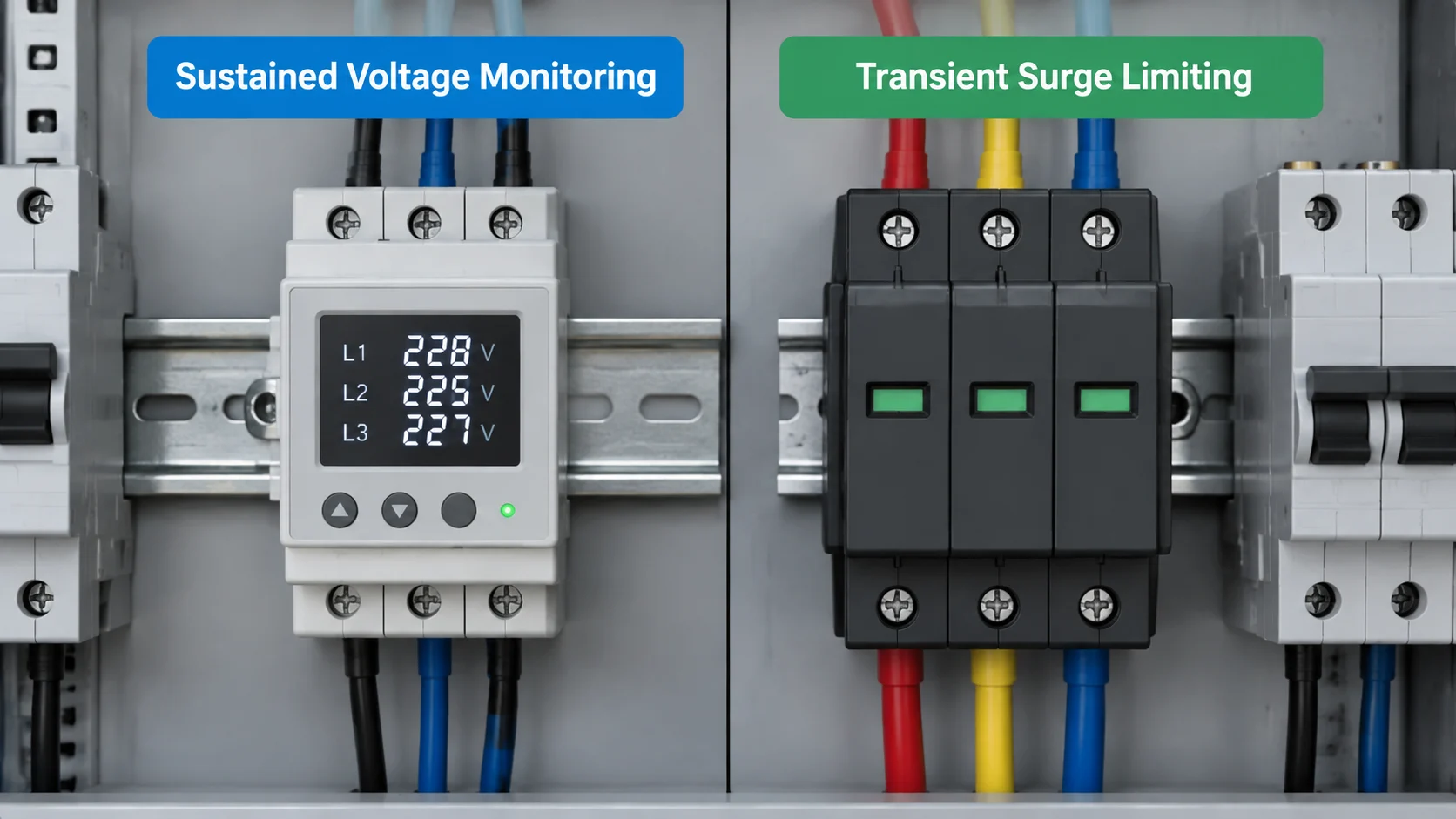
An over and under voltage protector watches the supply against configured limits. If voltage remains above an overvoltage threshold or below an undervoltage threshold according to the device’s operating logic, it disconnects the downstream load. Depending on the model, the user may be able to set trip thresholds, recovery thresholds, and delays.
This matters for equipment that is sensitive to an abnormal supply over time. A low voltage condition, for example, may prevent a load from operating as intended; an excessively high supply can stress connected equipment. A protector cannot repair or stabilize the supply. Its role is to interrupt the circuit under specified conditions and, where supported, reconnect after acceptable voltage is restored.
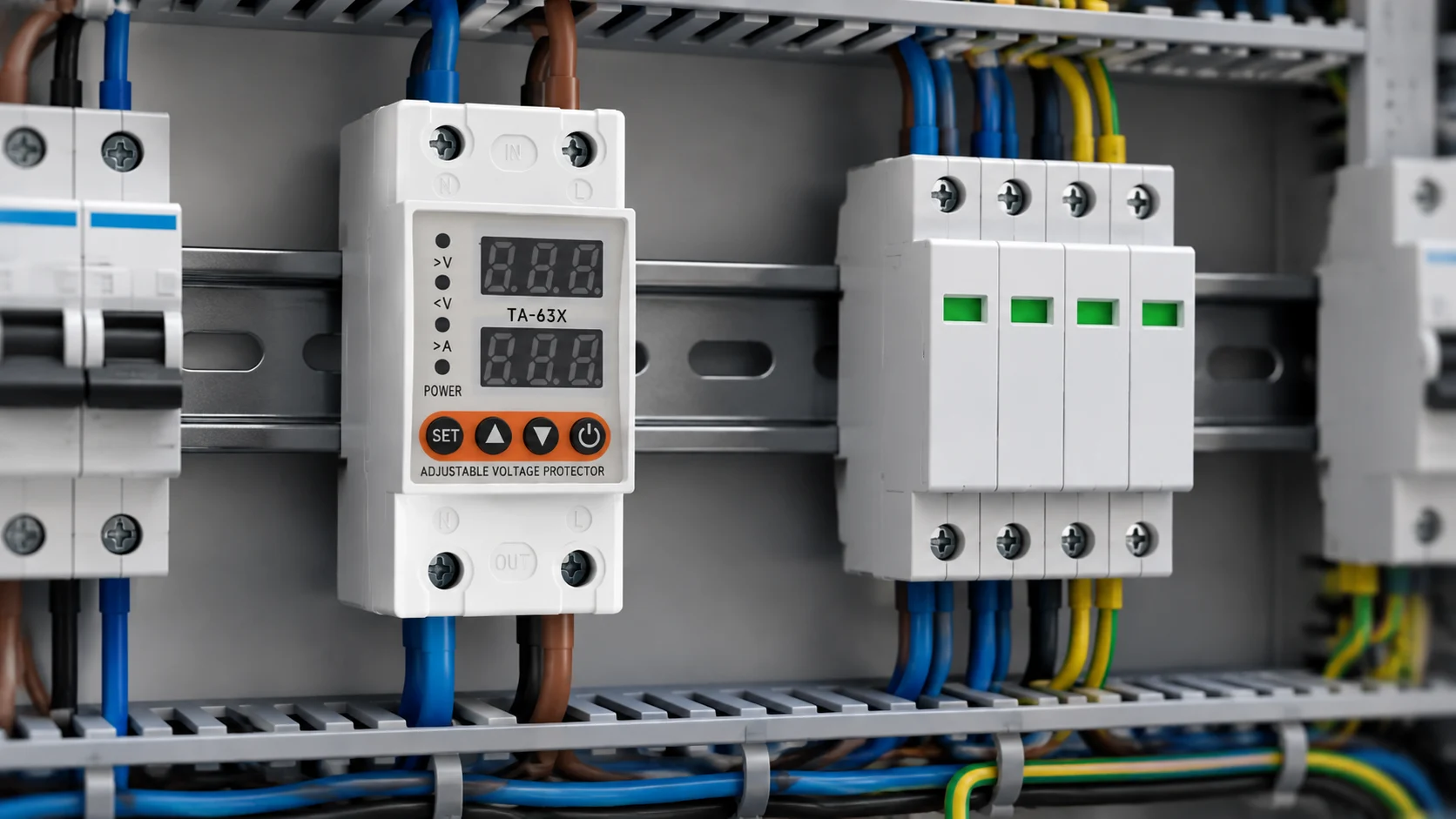
ZKELE’s TA-63X adjustable over and under voltage protector is listed with adjustable overvoltage and undervoltage parameters, a voltage/current display, overcurrent protection, and automatic reclosing. Its published page identifies a 63 A rated current. For a project, confirm the product’s rated operating voltage, wiring, load characteristics, and settings against the actual circuit before selection.
A surge protective device addresses a different time scale. Transient overvoltages can result from lightning activity or switching in an electrical system. An appropriately selected SPD limits the voltage appearing across protected equipment by handling the surge according to its design and installation.
An SPD is chosen using its stated ratings and the installation environment, including system voltage, SPD type, protection level, discharge capability, and the connection arrangement. Its effectiveness also depends on suitable installation and coordination with the rest of the electrical system. A plug-in surge strip for a single device and a panel-mounted SPD serve different installation positions; neither should be assumed to provide every kind of protection.
An SPD is designed around transient events. A sustained abnormal supply voltage is a separate problem that needs an appropriate monitoring and disconnection strategy.
If measurements confirm a sustained undervoltage condition, a suitably rated over and under voltage protector can disconnect the affected circuit at its configured threshold. The underlying supply problem still needs to be diagnosed. An SPD alone will not correct the low voltage.
For a site with lightning exposure or switching transients, evaluate an SPD appropriate to the distribution system and the equipment being protected. A voltage protector with overvoltage and undervoltage settings should not be described as a substitute for an SPD unless the manufacturer specifies a tested transient protection function.
Some projects need both devices: one monitors sustained voltage conditions, while the other limits transient overvoltages. Their settings, installation points, backup protection, and suitability must be checked as part of the overall circuit design. The choice depends on measured supply conditions and equipment requirements, not simply on which device has the higher current rating.
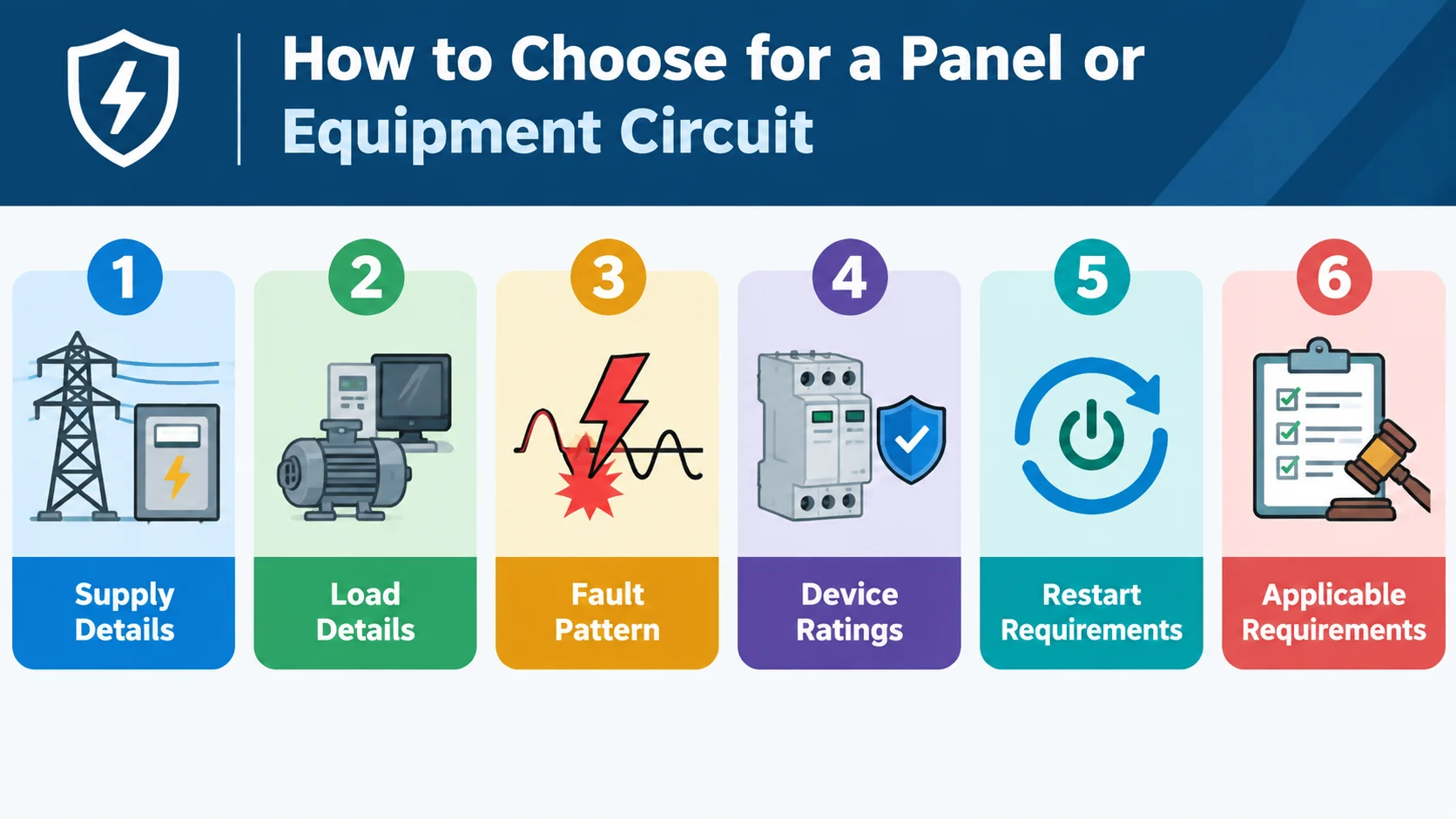
Before ordering either device, collect the following information:
For a TA-63X inquiry, send the circuit voltage, connected load, expected current, desired trip and recovery behavior, and project location. That information lets the supplier confirm whether this particular model is suitable. You can also browse the ZKELE product catalog for other protection devices, or send your circuit details to the team for model confirmation.
No. In this article, “voltage protector” means a device that monitors sustained overvoltage or undervoltage and disconnects a circuit according to its settings. An SPD is selected to limit short transient overvoltages.
An ordinary SPD is not a solution for sustained undervoltage. Diagnose the supply and consider a suitably rated voltage-monitoring and disconnection device where appropriate.
You may need both if the installation faces sustained voltage faults and transient surge exposure. Review the complete circuit and select each device for its own function.
No. Automatic reclosing restores power under the device’s configured conditions. Machinery and other loads may need separate controls to prevent an unsafe or unwanted restart.
The choice between a voltage protector vs surge protector depends on the disturbance you need to address. Check whether the supply stays outside the permitted range, experiences short transients, or both. Then match the protective function and product ratings to the circuit and the connected equipment.
For projects that need adjustable over and under voltage monitoring, review the TA-63X product details and request model confirmation using your circuit specifications.