How to Protect a Water Pump Motor from Overload
Protect a water pump motor from overload: why pump motors overheat, how to select and set an MPCB, and which pump-specific protections to add.
Read More
Selecting the correct IP rating directly influences equipment lifespan, operational safety, and long-term maintenance expenses. IP65, IP66, and IP67 are widely used for outdoor electrical enclosures, control cabinets, sensors, security cameras, and industrial devices.
Their main difference is the level of protection against water.
IP65 is suitable for rain and low-pressure water spray. IP66 provides stronger protection against powerful water jets. IP67 goes further by protecting equipment during short periods of water immersion.
Using an unsuitable rating can allow moisture to enter the enclosure. This may lead to corrosion, electrical faults, equipment shutdowns, and frequent replacement.
For this reason, the waterproof rating should be selected according to the actual installation conditions. The highest number on a specification sheet is not always the most appropriate choice.
| Rating | Dust Resistance | Water Resistance | Recommended Applications |
|---|---|---|---|
| IP65 | Fully dust-tight | Protected from water jets | Outdoor rain and mild water exposure |
| IP66 | Fully dust-tight | Resistant to high-pressure water jets | Severe weather and equipment washdown |
| IP67 | Fully dust-tight | Protected during temporary immersion | Flood-prone areas and devices installed near ground level |
IP65, IP66, and IP67 all begin with the number 6. This confirms that each enclosure is completely sealed against dust. Their water resistance is what sets them apart.
However, IP67 should not automatically be considered superior to IP66. The correct option depends on the actual risk. Choose IP66 for powerful spray or frequent washdown. Select IP67 when temporary flooding or submersion is possible.
An IP rating, short for Ingress Protection rating, shows how effectively an electrical enclosure prevents external materials from entering.
It measures protection against solid particles, dust, dirt, accidental contact, and water. The rating helps users determine whether an enclosure is suitable for a specific environment.
An IP rating explains how effectively an enclosure blocks dust, solid particles, and water. The letters “IP” stand for Ingress Protection. This classification system is defined by IEC standards and is widely used for electrical and industrial products.
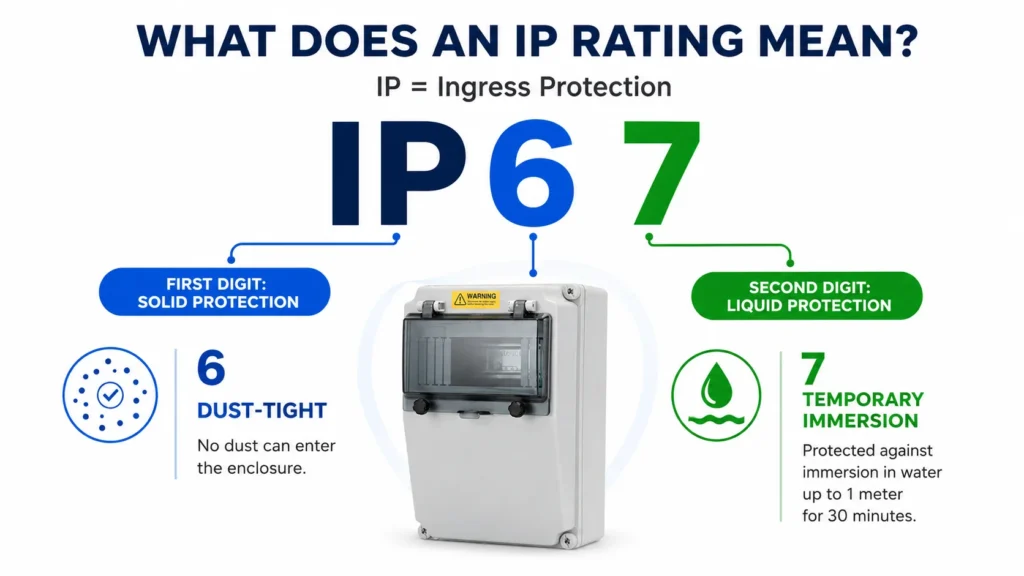
The rating normally contains two digits.
The first number indicates resistance to solid objects and dust. The second shows the level of protection against water.
For example, in an IP65 rating, the digit 6 means the enclosure is completely dust-tight. The digit 5 confirms that it can resist water jets.
This system gives buyers more useful information than a general term such as “waterproof.” Equipment that withstands rain may fail during high-pressure cleaning. Likewise, a product tested for temporary immersion may not offer the same protection against powerful water spray.
For projects that must meet North American specifications, it is also important to review the differences between NEMA and IP ratings before selecting an enclosure.
IP65, IP66, and IP67 are among the most frequently specified protection levels for electrical enclosures. Although all three ratings provide complete dust protection, their resistance to water differs considerably.
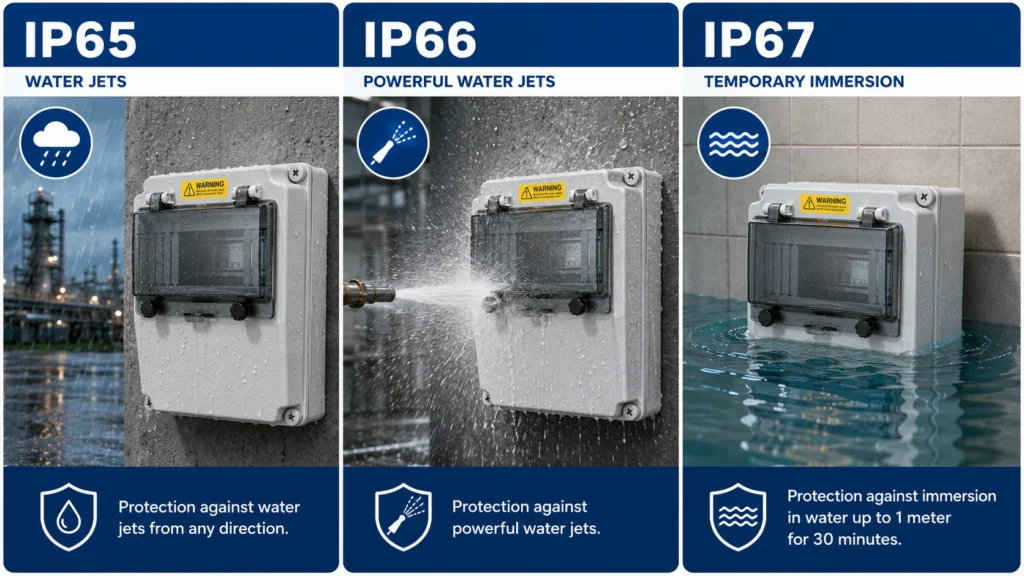
The table below explains the protection level and testing conditions for each rating.
| IP Rating | Water Protection | Meaning | Test Conditions |
|---|---|---|---|
| IP65 Enclosures | Protection against water jets | Water sprayed from a 6.3 mm nozzle in any direction must not cause harmful ingress. | Minimum test time: 15 minutesFlow rate: 12.5 litres per minutePressure: 30 kPa from a distance of 3 metres |
| IP66 Enclosures | Protection against powerful water jets | Strong water jets from a 12.5 mm nozzle must not damage the enclosed equipment or allow harmful water entry. | Minimum test time: 3 minutesFlow rate: 100 litres per minutePressure: 100 kPa from a distance of 3 metres |
| IP67 Enclosures | Protection during temporary immersion | The enclosure must prevent harmful water ingress when submerged under specified depth and time conditions. | Test time: 30 minutesMaximum immersion depth: up to 1 metreThe enclosure top must remain at least 15 cm below the water surface |
The International Electrotechnical Commission developed the IP classification system. It is widely applied across Europe and Asia and is also used for many products sold in North America.
Testing may be performed or certified by organizations such as TÜV or UL. Both use strict testing procedures, although certification requirements may vary by market and product type.
An IP rating does not automatically confirm resistance to ultraviolet exposure. For outdoor installations, engineers should also check whether the enclosure material contains UV-resistant additives or has been separately tested for long-term sunlight exposure.
NEMA provides another enclosure classification system commonly used in North America. It serves a similar purpose to the IEC IP system, but the two standards are not identical.
For general reference, NEMA 3 is sometimes compared with IP45, while NEMA 4 is often associated with IP66. However, these comparisons are only approximate because the testing methods and performance requirements differ.
When equipment is intended for the North American market, a NEMA rating may be required by the customer, contractor, or project specification. Review both standards carefully instead of treating one rating as a direct replacement for the other.
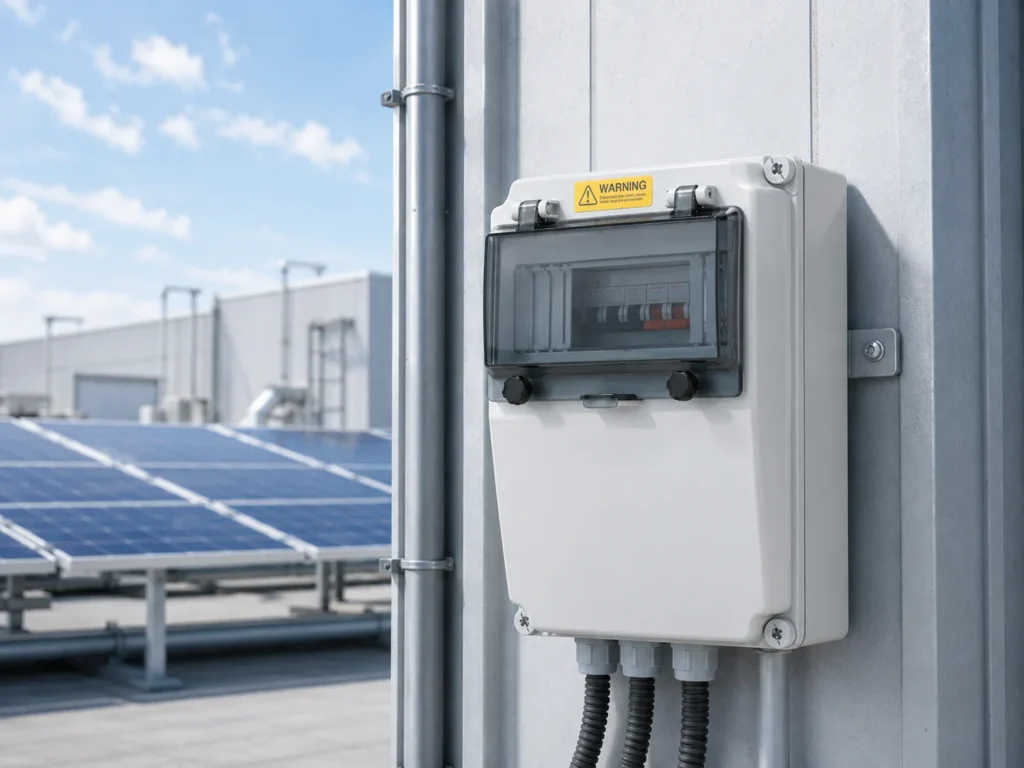
Discover dust-tight and water-resistant enclosures for outdoor, industrial, marine, and custom electrical applications.
IP65, IP66, and IP67 all offer complete protection against dust. However, each rating is designed for a different level of water exposure.
IP65 is suitable for standard outdoor conditions, including rain and light water spray. IP66 is a stronger choice for high-pressure jets and regular washdown. IP67 is recommended when short-term immersion or temporary flooding may occur.
For outdoor, industrial, marine, or customized electrical applications, enclosure selection should be based on the real operating environment.
Share your installation conditions and project requirements with us. We can help you select a suitable IP-rated enclosure that improves safety, reduces maintenance, and extends equipment service life.
Not in every situation. IP66 is designed to resist powerful water jets, while IP67 protects against temporary immersion. Choose IP66 for frequent hose cleaning or forceful spray. Select IP67 when brief flooding or submersion is more likely.
Yes. IP65 enclosures are dust-tight and resist water jets from any direction. They are commonly used for outdoor equipment exposed to rain, dust, and normal water spray. For stronger jets or severe washdown, IP66 may be more appropriate.
Both ratings provide complete dust protection. The difference is water pressure. IP65 resists standard water jets, while IP66 withstands more powerful jets delivered through a larger nozzle and at higher pressure.
Not necessarily. The water tests for jets and immersion evaluate different conditions. An enclosure rated IP67 should not automatically be assumed to meet IP65 or IP66 water-jet requirements unless the manufacturer lists a combined rating.
No. Both systems describe enclosure protection, but their testing requirements and coverage are different. NEMA states that an IP rating cannot be treated as directly equivalent to a NEMA enclosure type.