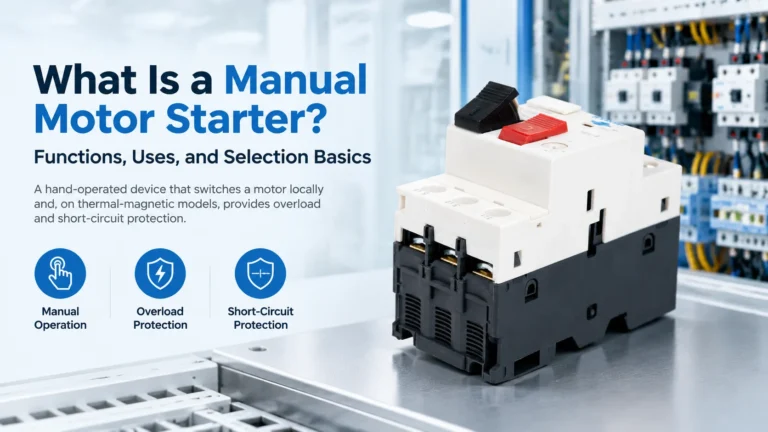
What Is a Manual Motor Starter? Functions, Uses, and Selection Basics
What is a manual motor starter? Learn how it switches a motor locally, where it fits beside a contactor or MPCB, and what to check before choosing a model.
Read More
Choosing among motor overload protection devices starts with one question: what condition must the device detect, and what should happen when it does? A motor can overheat because of sustained excess current, a stalled load, repeated starts, poor cooling, or a problem inside the winding. Different protective devices observe different signals and act through different parts of the control circuit.
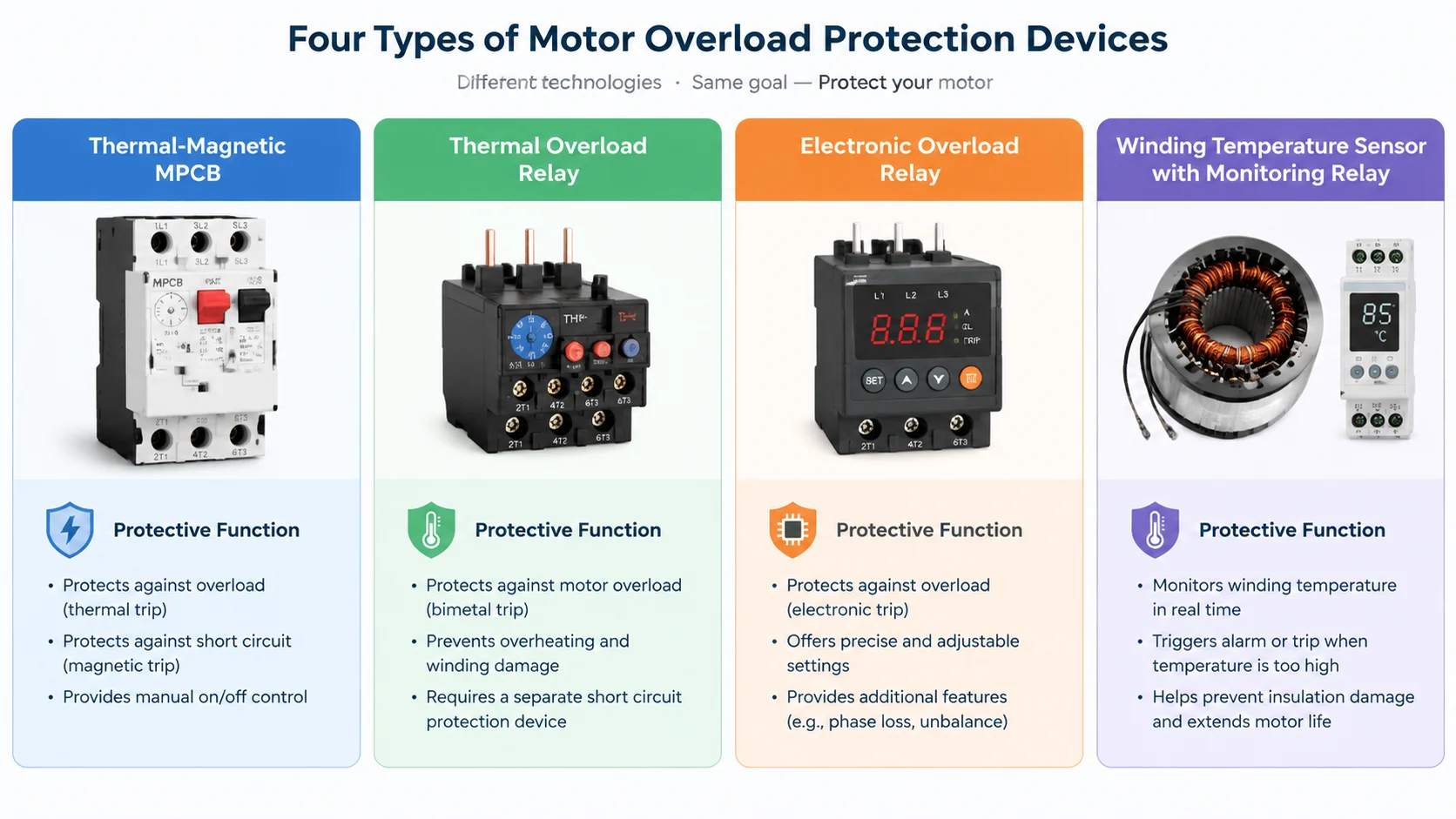
For an industrial panel, the main options include a thermal-magnetic motor protection circuit breaker (MPCB), a thermal overload relay, an electronic overload relay, and temperature sensors inside the motor used with a compatible monitoring device. An MPCB may also provide documented short-circuit protection. A thermal overload relay or winding sensor does not automatically provide that function. The complete motor circuit still has to satisfy its control, overload, and short-circuit requirements.
This guide compares what each device contributes so panel builders and equipment buyers can prepare the right specification. It focuses on which device type to consider, while our existing electric motor overload protection guide goes deeper into thermal behavior, trip dynamics, and commissioning.
An overload is sustained operation outside the motor’s acceptable thermal conditions. The current may be above its expected running value because the load is too heavy, the motor has stalled, or the supply or process has changed. Heating builds over time. Motor overload protection therefore needs an appropriate response to current and time, or direct temperature feedback where the motor supports it.
A short circuit is a different electrical fault that can involve very high current and requires a suitably rated protective arrangement. Selecting an overload relay does not remove the need to check short-circuit protection. Similarly, a device’s overload adjustment range does not tell you whether its short-circuit rating meets the prospective fault level at the installation.
The exact trip behavior, functions, and ratings belong to the selected model. Use the motor nameplate, device documentation, and applicable installation requirements rather than a generic percentage or time value from an article.
| Device | What it normally monitors | How it acts in a typical arrangement | Short-circuit function | Typical selection question |
|---|---|---|---|---|
| Thermal-magnetic MPCB / protective manual starter | Motor current through its protective elements | Trips its own main contacts; may also allow local manual switching | Can be included, subject to exact model rating | Do we want an individual motor protective device with documented overload and short-circuit functions? |
| Thermal overload relay | Current-related heating or a thermal model in a conventional starter | Typically opens a control contact to de-energize a contactor | No; separate short-circuit protection is needed | Does the starter use a contactor and a separate adjustable overload element? |
| Electronic overload relay | Measured current and model-dependent additional conditions | Typically signals or opens the contactor control circuit | Usually not a substitute for short-circuit protection | Are diagnostics or verified additional functions needed? |
| Winding sensor with a compatible monitoring relay | Temperature at a sensor installed in or near the motor winding | Signals a control or shutdown action through the specified system | No | Does the motor provide a sensor, and is direct temperature feedback valuable? |
The table describes common functions, not an approved wiring diagram. In particular, a bare PTC thermistor is a sensor, not a stand-alone breaker, and an overload relay normally works as part of an assembly with a switching device. Verify the required combination and its documentation before ordering.
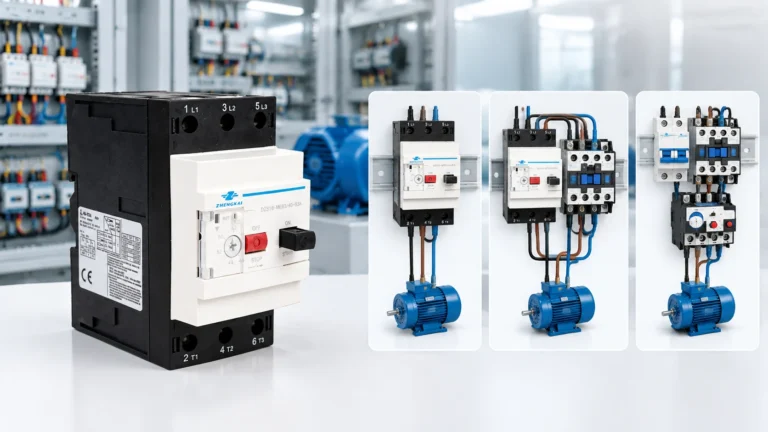
An MPCB designed for motor duty can combine an adjustable overload function with short-circuit protection in one product. A suitably rated manual starter and protector may also provide local ON/OFF operation. This can make it a useful starting point for an individual motor circuit where its documented current range, voltage rating, fault rating, and control method fit the job.
The word thermal here refers to an overload function that responds to a current and time condition. It does not mean that the MPCB directly measures the temperature inside a motor winding. Likewise, do not assume every model has the same phase-loss sensitivity, adjustable magnetic trip, trip class, or accessories.
If a PLC or process controller must repeatedly start and stop the motor, the panel may also need a compatible contactor for normal electrical switching. The MPCB and contactor must be selected as an appropriate combination, not just by matching ampere numbers. Browse ZKELE’s motor protection circuit breakers and manual starters and then inspect the applicable individual product page for its published range. Request the exact model documentation for final selection.
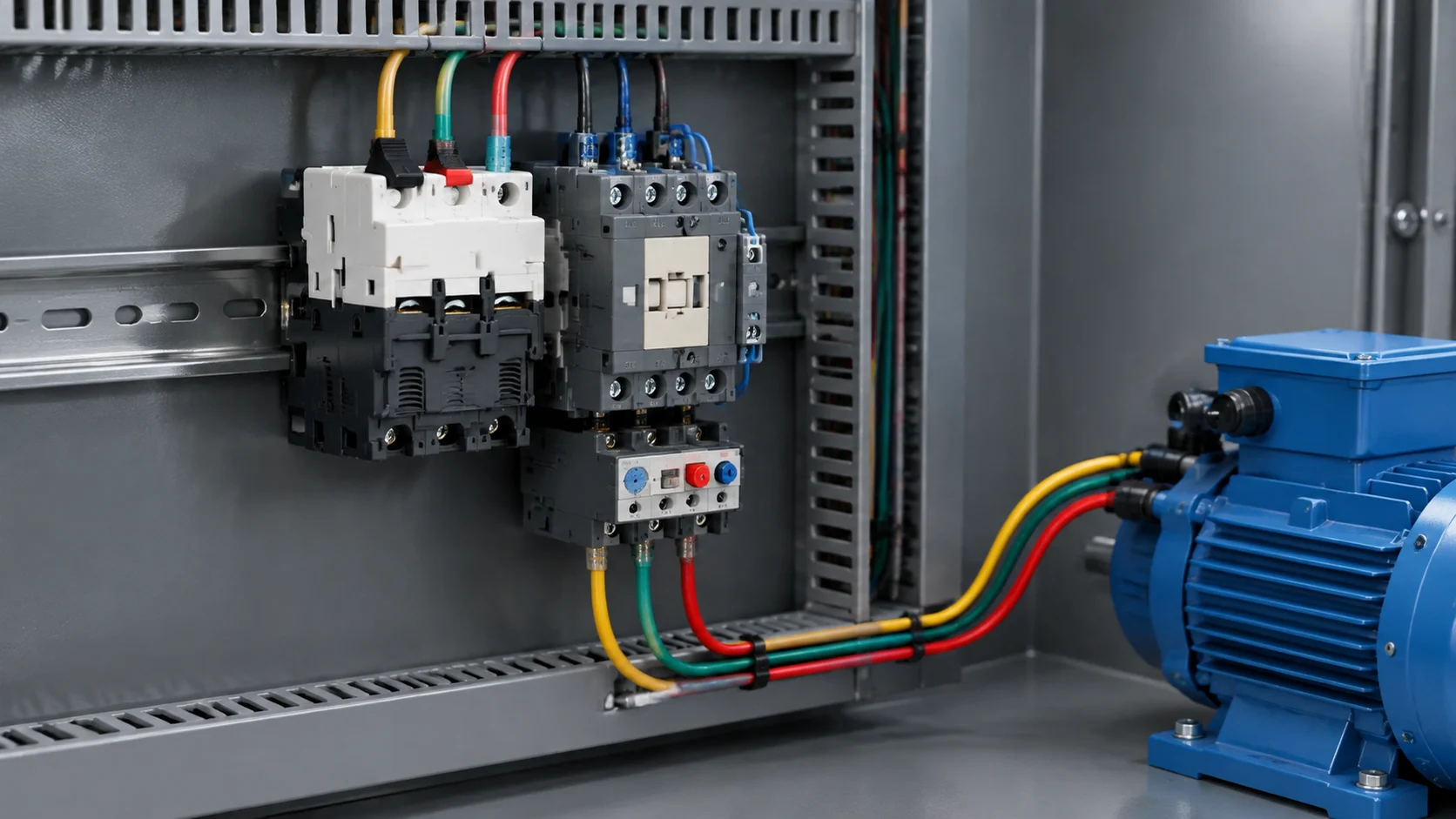
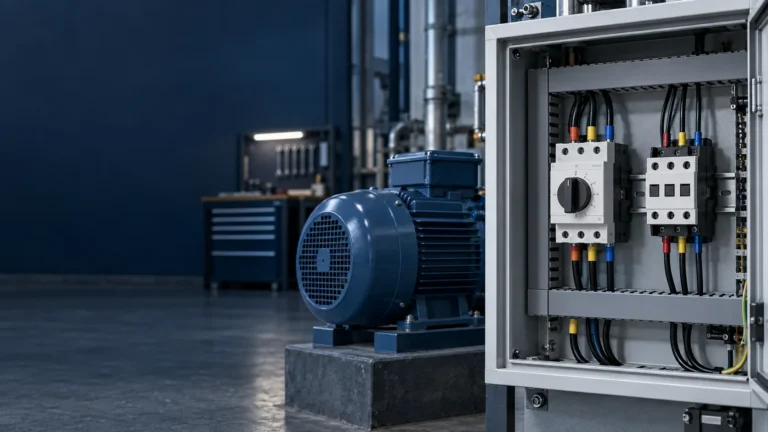
A thermal overload relay is a common choice in a starter with a contactor. It responds to an overload condition and, in a typical control circuit, causes the contactor to open. It is not normally used as the device that directly interrupts a high short-circuit current; the starter design needs suitable short-circuit protection elsewhere.
The relay’s adjustable range must suit the motor and its manufacturer instructions. Confirm the way it is connected to the contactor, its required reset behavior, and its response to the motor’s starting conditions. A component drawing for a different product line should not be treated as a verified terminal diagram for the proposed assembly.
If the proposed MPCB already contains a documented motor overload function, adding a separate relay is not automatically necessary. Determine which protective function each component is expected to perform and check the complete design. Our MPCB vs thermal overload relay comparison covers how the two devices differ.
Electronic relays measure current using an electronic sensing system. Depending on the specific product, they may provide additional settings, indications, and diagnostic information. Those capabilities can matter when a panel builder needs to distinguish repeated starts, phase-related problems, or a process fault from a simple sustained overload.
The feature list varies widely. Do not promise phase-loss detection, communications, underload detection, event logging, or a particular accuracy for an unspecified relay. Ask whether a proposed feature is documented for the actual order code, whether the control system can use its outputs, and how the device will be commissioned.
An electronic overload relay still needs a properly designed short-circuit protective and switching arrangement. It is one component of the motor starter, not an automatic substitute for the entire circuit.
Some motors are built with PTC thermistors or other temperature sensors near the windings. A compatible monitoring relay can use that signal to trigger a control action when the motor reaches the specified temperature condition. This is direct temperature feedback, unlike devices that infer heating from current.
Temperature feedback can be useful when current alone does not describe the motor’s heating well, such as a motor with poor cooling or a demanding duty cycle. However, a sensor cannot be assumed to provide the branch circuit’s required short-circuit protection or every overload function. Verify the motor sensor type, monitoring relay, control response, and the rest of the protection arrangement as a system.
ZKELE’s landing page lists MPCB products; it does not establish that ZKELE sells every sensor or relay discussed in this comparison. If your project uses embedded winding sensors, include their specifications when requesting MPCB or starter information.
Use the following sequence instead of choosing the least expensive component in isolation:
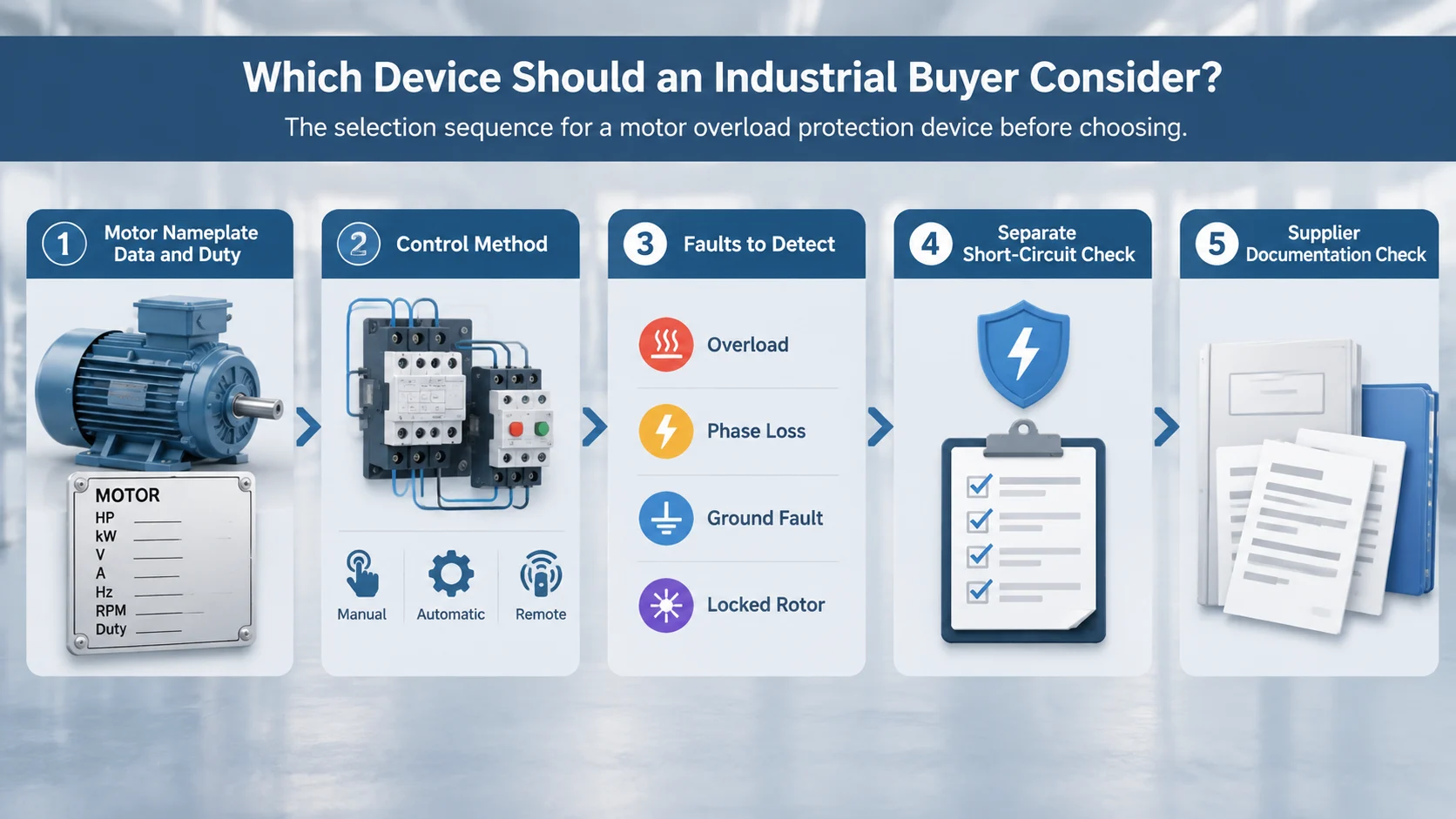
For example, a locally operated motor may be a candidate for a suitably rated protective manual starter. A remotely operated motor may use an MPCB plus contactor, or a contactor with a separate overload relay and short-circuit device. If the motor includes winding sensors, the design may use a compatible temperature-monitoring relay as an additional input. These are starting points for specifying a system, not universal recipes. For comparisons of complete three-phase starter arrangements, see our 3 phase motor starter with overload protection guide.
If your motor is a water pump, remember that an overload device alone does not detect every dry-run or flow problem. See how to protect a water pump motor from overload for the application-specific checks.
To get a useful recommendation, send a photo of the motor nameplate or list its rated voltage, full-load current, frequency, and power. Add the application, whether operation is local or remote, the proposed contactor if any, starting method, known available fault current, quantity, and destination market. If the motor has an embedded thermal switch or PTC sensor, identify it separately rather than calling it an MPCB accessory.
ZKELE’s MPCB product range can help narrow operating styles and product series. The team can then confirm what product information and documentation is available for the proposed model. Send your motor details for a quotation.
A thermal-magnetic MPCB can combine motor overload and short-circuit protection when its exact model and ratings are suitable for the installation. A typical thermal overload relay or winding temperature sensor does not by itself provide the required short-circuit protective function.
No. A thermal overload relay supplies a motor overload function within an appropriate starter arrangement. An MPCB may combine documented motor overload and short-circuit functions and may offer manual operation. Compare the exact devices and the circuit they will be used in.
An embedded thermal switch or sensor indicates a temperature condition according to its design. It does not automatically supply the required short-circuit protection, manual control, or all other functions of a selected MPCB. Check the motor documentation and the complete circuit.
No single device type fits every project. The control method, motor duty, required functions, available fault current, maintainability, and documented component combination determine whether an MPCB, separate relay, sensor input, or another arrangement is appropriate.
Use the motor’s nameplate full-load current and the selected device’s instructions for the final choice. Power is useful context, but motors with the same kW or HP can draw different current at different voltages and operating conditions.
Motor overload protection devices differ in what they sense, which part of the circuit they operate, and whether they also address short-circuit faults. Select the device as part of a complete motor starter: begin with the nameplate and control method, verify the fault level, and confirm exact product documentation. For ZKELE motor protection options, compare its MPCB series and share your motor and panel details for model confirmation.