Motor Overload Protection Devices: Which Type Fits Your Motor Circuit?
Motor overload protection devices compared: MPCB, thermal and electronic overload relays, and winding sensors, and what each contributes to a motor circuit.
Read More
What is a manual motor starter? It is a device used to switch an electric motor on and off by hand. Depending on its design, it may also provide motor overload and short-circuit protection. The important word is manual: the operator actuates the device locally. If a PLC, remote push button, or process controller must start and stop the motor during normal operation, the design usually needs an electrically controlled device such as a contactor as well.
Names can be confusing. Manufacturers may describe certain protective manual starters as a manual motor protector, motor protection circuit breaker (MPCB), or manual starter and protector. But a product described only as a manual motor switch may not offer the same protective functions. Before treating two products as equivalent, read the exact model’s data sheet, approvals, and installation instructions. For a broader definition of the MPCB itself, see our introduction to the motor protection circuit breaker.
This article explains what the device does, where it fits in a motor circuit, and which details to check before choosing one. If you already have the motor details, browse ZKELE’s motor protection circuit breakers and manual starters to compare its product series.
When an operator moves the handle or presses the appropriate control button, the starter opens or closes its main contacts. In the ON position, it allows power to reach the motor through the selected circuit arrangement. In the OFF position, it opens that path. The actual method of operation and suitability for switching or isolation must be confirmed for the selected model and installation.
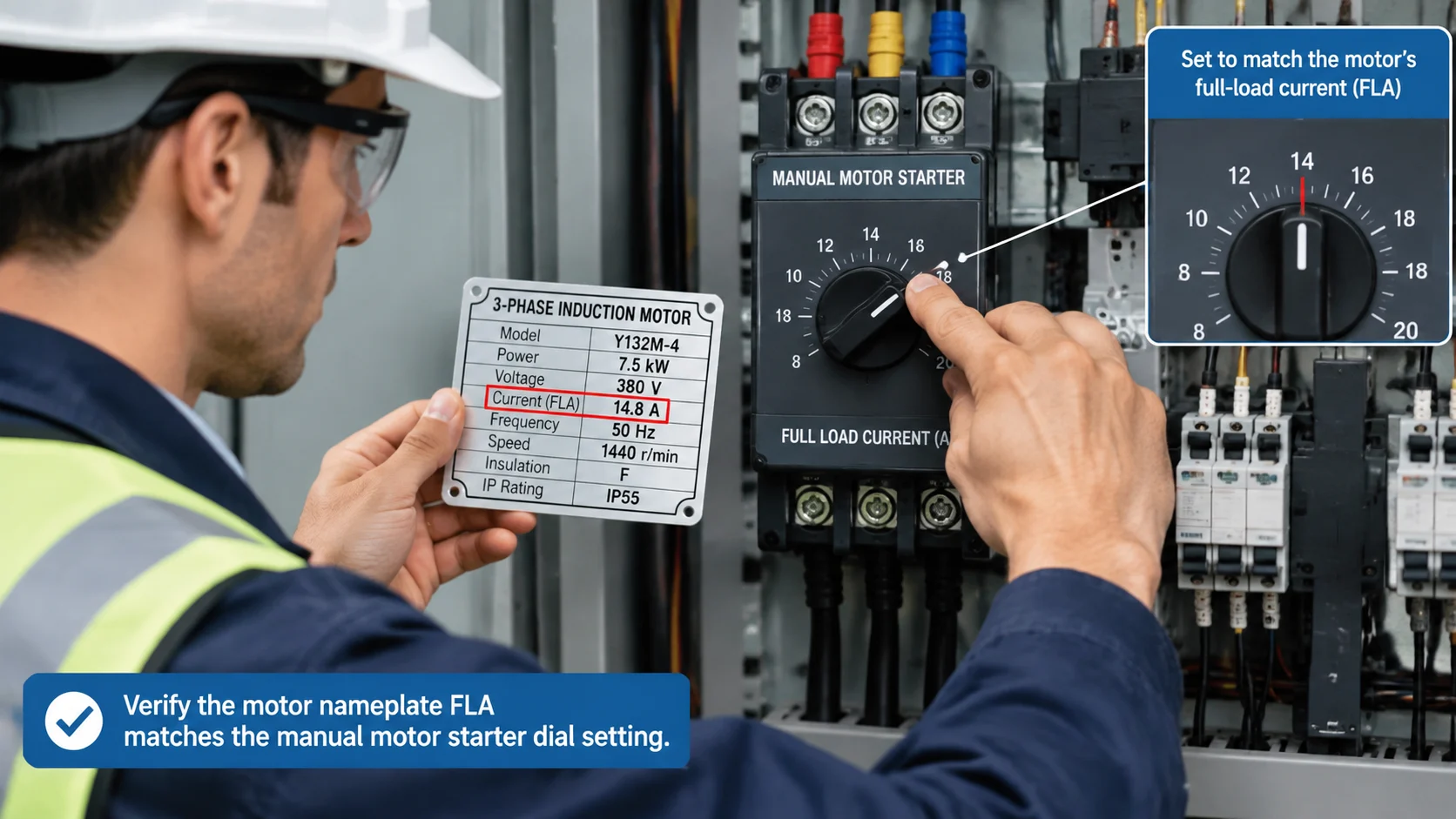
On a thermal-magnetic manual starter and protector, a thermal element responds to a sustained overload while a magnetic element responds to a sufficiently high short-circuit fault. The adjustable thermal range is selected with reference to the motor’s nameplate full-load current. The final dial setting follows the specific device instructions and installation requirements; it should not be copied from an example for another model.
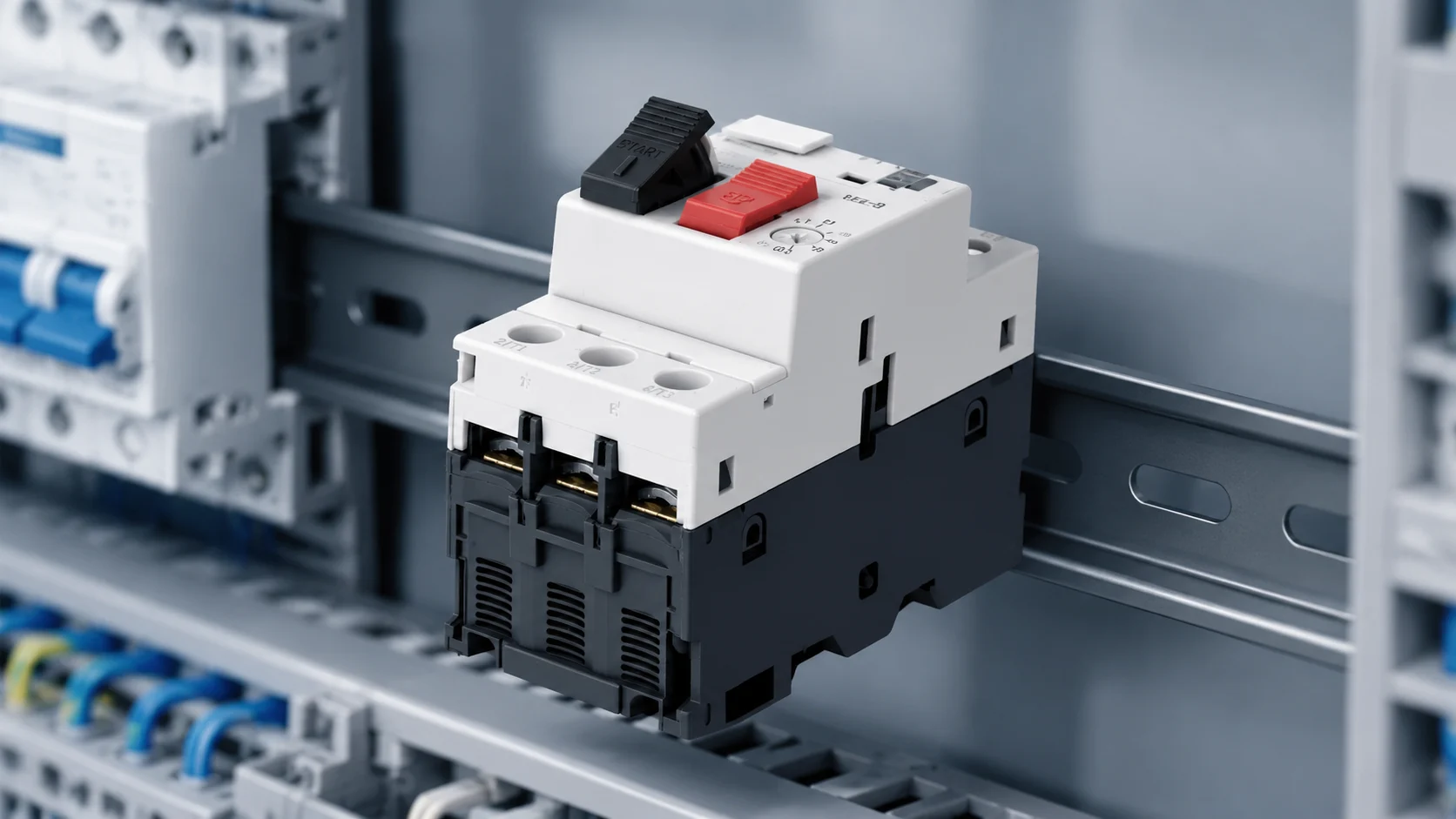
Some products also offer functions or accessories such as auxiliary indication, a shunt trip, or an undervoltage release. Do not assume they are standard. Similarly, phase-loss sensitivity and short-circuit ratings vary by product. A sales description of a whole series is not a substitute for the data sheet of the order code being purchased.
The terms overlap in many product ranges, but they should not be used blindly. An MPCB commonly refers to a protective device for an individual motor circuit with an adjustable overload function and documented short-circuit performance. Some MPCBs also provide local manual start and stop through a handle or push buttons, allowing them to serve as manual starters in appropriate applications.
At the same time, the wider phrase manual motor starter switch can cover products with different designs and ratings. Ask three questions about any proposed device:
ZKELE’s GV2-M manual starter and protector is described as a thermal-magnetic device for three-phase motor switching and protection. Check the actual submodel and technical documentation for the adjustment range and ratings that apply to your motor.
These devices are often mentioned together because they can appear in the same motor panel. Their jobs are distinct:
| Device | Normal control | Protective function to verify | Common design question |
|---|---|---|---|
| Protective manual motor starter / MPCB | Local operation by a person | Motor overload and short-circuit protection, according to model | Is local manual operation sufficient? |
| Contactor | Electrical switching in response to a coil command | A contactor alone does not establish motor overload or short-circuit protection | Does a PLC or remote control need to start and stop the motor? |
| Overload relay | Not normally the device used to switch motor power for routine commands | Motor overload protection in a suitable starter arrangement | Is overload protection already provided by the selected protective device? |
| Simple manual switch | Local manual switching | Protective functions cannot be assumed from the word “switch” | What other protective devices does this circuit require? |
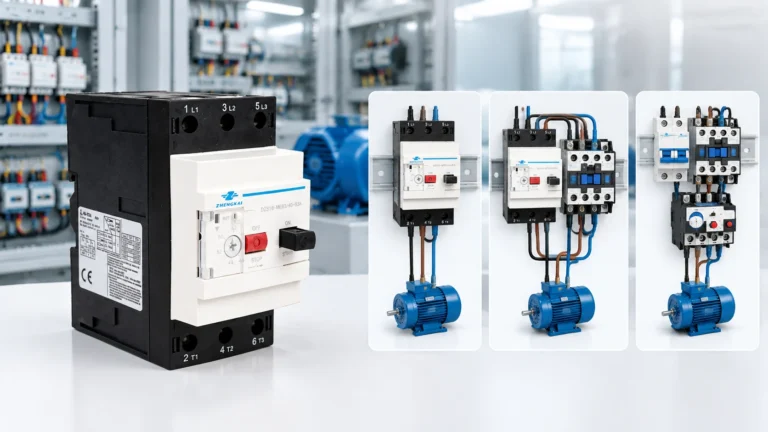
A suitable manual starter may be enough for the required local switching and motor-specific protection in a simple application, subject to the full installation design. If the motor needs remote or automatic start and stop, a compatible contactor may be added. Another design uses a contactor and a separate overload relay with suitable short-circuit protection. For a side-by-side comparison of these complete three-phase arrangements, read our 3 phase motor starter with overload protection guide; for the wiring details of one electrically controlled arrangement, see the MPCB and contactor DOL starter guide.
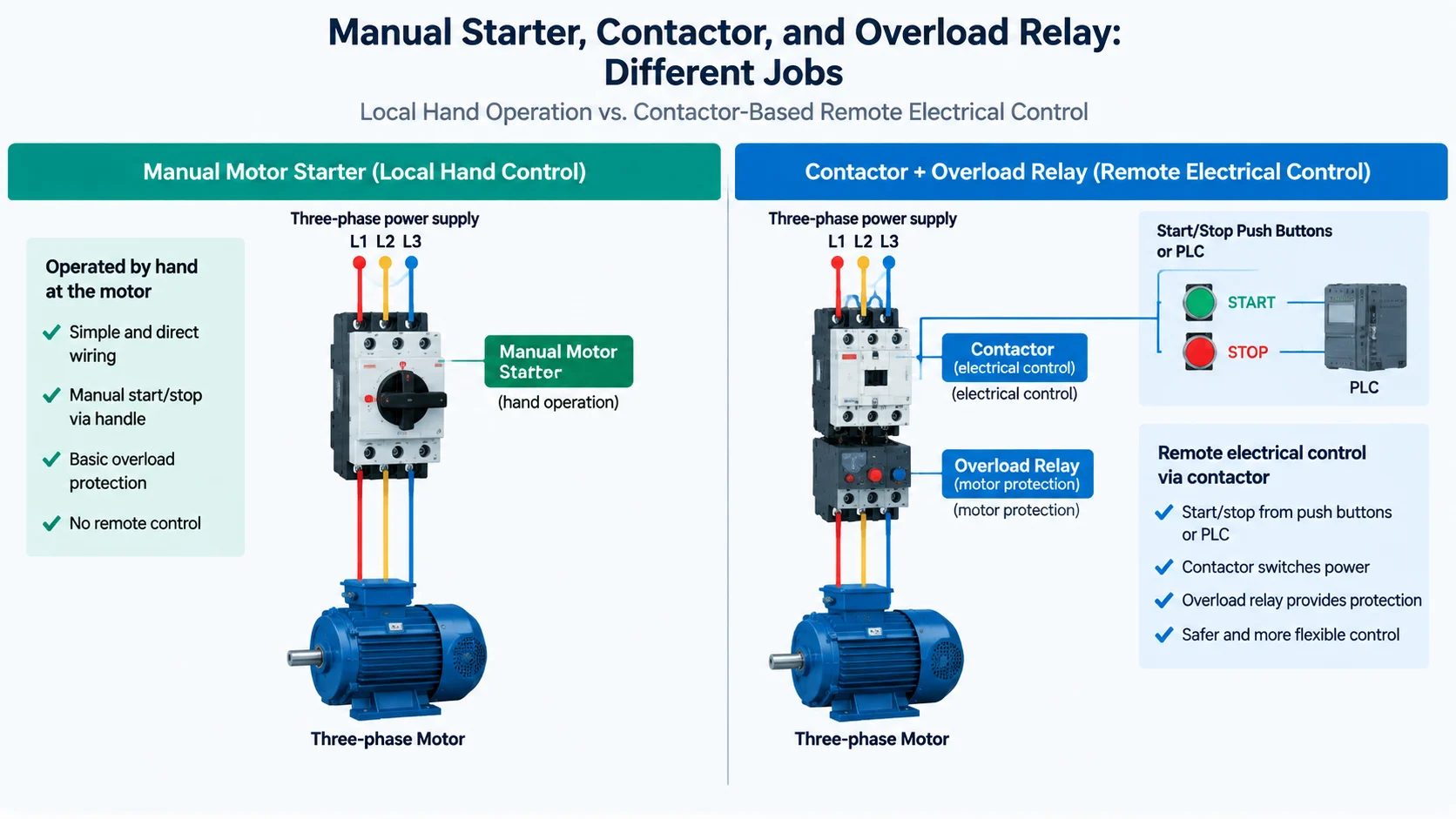
A protective manual starter is a practical option when a motor can be operated locally and the specified product covers its electrical requirements. Examples may include a suitable pump, fan, conveyor, or individual machine motor. The application alone does not prove suitability: starting behavior, fault level, environmental conditions, control needs, and the actual motor data must still be checked.
Consider a small machine with one motor and an operator who starts it from the panel. Local manual operation may meet the control requirement. Now consider a ventilation system commanded by a building controller. The protective device may still be used in the motor circuit, but the controller’s normal start and stop commands generally require a contactor or another suitable electrically controlled arrangement. For a practical example, see the MPCB and contactor DOL starter guide.
Some applications also need protection unrelated to the motor’s electrical current. A pump, for instance, may need separate dry-run detection through a level, pressure, or flow device. A manual starter should not be presented as a complete solution to every process fault. Our water pump motor protection guide explains that distinction.
Start with the motor nameplate and the circuit, not a model that merely looks familiar. Record:
Then compare the applicable product pages and request confirmation for the exact order code. ZKELE’s MPCB product range lists multiple operating styles and series, including GV2-M and GV3-M. Their features and ratings are model-specific. For more detail on matching an adjustable range to motor current, read how to select an MPCB for a 3-phase motor.
Treating every manual switch as a protector. Look for documented overload and short-circuit functions rather than inferring them from a handle, push buttons, or a product name.
Choosing only by kW or HP. Motors of similar power can have different nameplate currents. Confirm that the adjustment range includes the actual motor current and follow the selected model’s instructions.
Assuming manual operation provides automatic control. A protective handle does not act as a contactor for repeated PLC or remote commands. Confirm the complete starter arrangement if electrical switching is required.
Ignoring the installation fault level. A current adjustment range addresses only one part of selection. The protective arrangement and any component combination must suit the available short-circuit current.
Copying one model’s claims to another. Accessories, phase-loss behavior, ratings, and documentation can vary even within a product family. Ask for the exact product information before specifying or purchasing.
A manual motor starter is locally operated. A contactor switches the motor circuit in response to an electrical control signal. Depending on the design, a protective manual starter can provide motor overload and short-circuit functions; a contactor alone does not provide the complete protection arrangement.
It depends on the exact device. A documented thermal-magnetic manual starter and protector can include adjustable motor overload protection. Other types of manual switches may not. Check the model instructions and the complete circuit rather than adding or removing a relay based only on the product name.
Yes, when the selected device is rated and documented for the motor and installation. ZKELE lists manual starter and protector products for three-phase motor applications. Confirm the actual voltage, current range, short-circuit rating, and required control method before ordering.
The normal operating mechanism is manual. Accessories may provide trip or indication functions on some models, but they should not be mistaken for an electrically controlled contactor that handles the application’s routine remote start and stop commands. Check the required control sequence and approved combination.
Use the motor’s nameplate full-load current to identify a model whose documented adjustable range includes that current. Verify the rest of the electrical ratings and follow the exact product instructions for final settings.
A manual motor starter lets an operator switch a motor locally; a properly specified starter and protector may also provide motor overload and short-circuit protection. The exact functions belong to the model, not the name on a search result. Start with the motor nameplate, decide whether local or electrical control is needed, and check ratings against the installation. Explore ZKELE’s manual motor starters and MPCBs or send your motor details to request a suitable model and its documentation.