Motor Overload Protection Devices: Which Type Fits Your Motor Circuit?
Motor overload protection devices compared: MPCB, thermal and electronic overload relays, and winding sensors, and what each contributes to a motor circuit.
Read More
A 3 phase motor starter with overload protection must do more than turn a motor on. The complete circuit needs a suitable way to start and stop the motor, protect it against sustained overload, and address short-circuit faults. The right components depend on the motor, the available fault current, the required control method, and the installation rules that apply to the project.
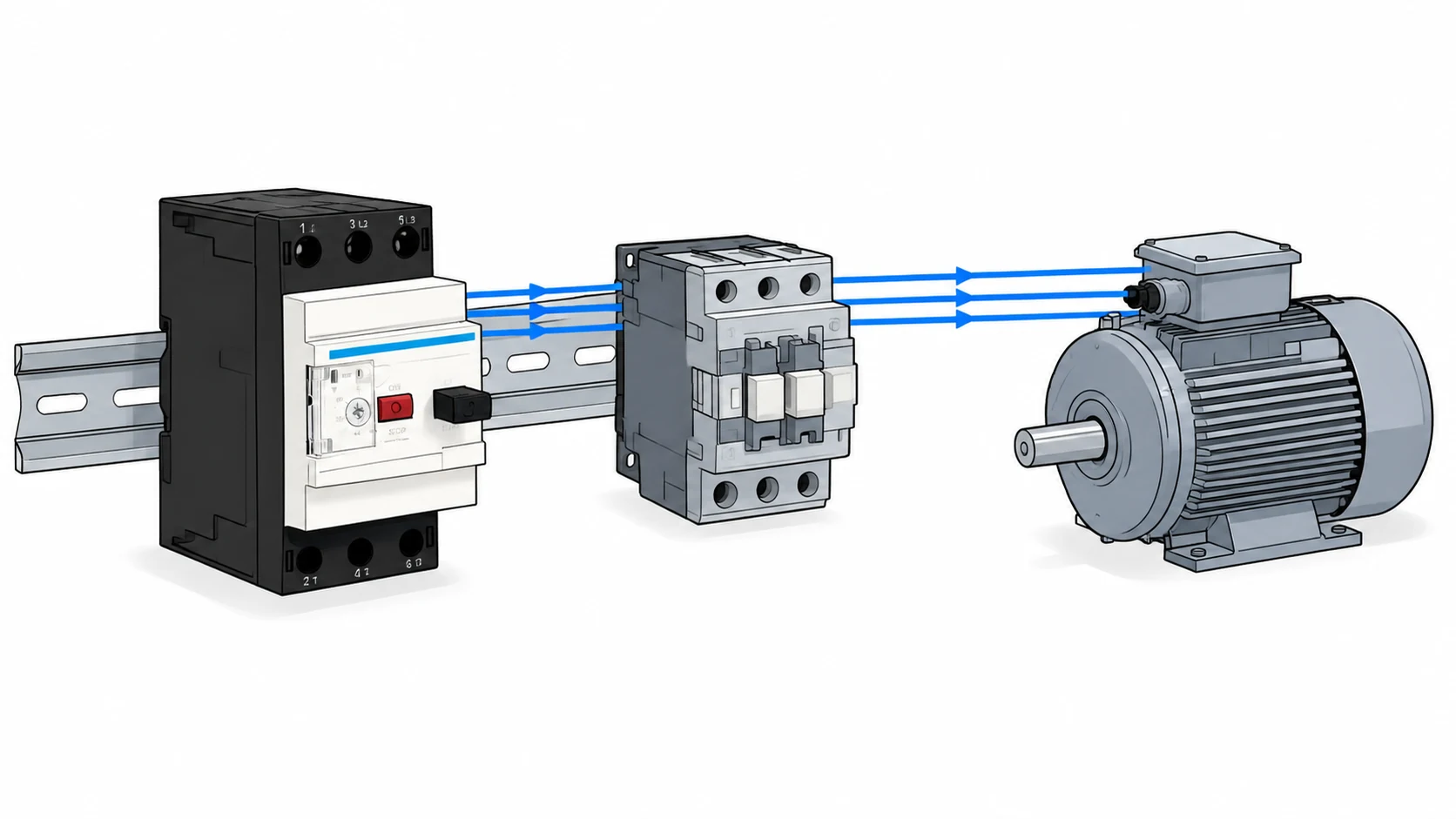
For a locally operated motor, a suitably rated manual motor starter or motor protection circuit breaker (MPCB) may combine manual switching and motor-specific protection in one device. If a controller must start and stop the motor remotely, the design may add a contactor. Another common approach uses a short-circuit protective device, a contactor, and a separate overload relay. These are different arrangements, not interchangeable shopping lists.
This guide compares the three approaches and shows what a panel builder or buyer should confirm before ordering. For a detailed discussion of a specific DOL power and control circuit, see our MPCB and contactor wiring guide.
Before choosing parts, separate the functions of the motor circuit:
An overload relay alone does not perform every function above. Likewise, a contactor is a switching device; adding one does not by itself establish the required motor overload or short-circuit protection. A product’s exact capabilities must be checked against its data sheet.
| Arrangement | Normal motor control | Overload protection | Short-circuit protection | Typical reason to consider it |
|---|---|---|---|---|
| Manual motor starter / thermal-magnetic MPCB | Local manual operation | Built into the selected device, if documented | Built into the selected device, subject to its ratings and installation conditions | A simple motor circuit that permits local manual control |
| MPCB + contactor | Contactor provides electrical start/stop; MPCB can provide local manual operation | Provided by the selected thermal-magnetic MPCB, if documented | Provided by the selected MPCB, subject to verified combination data | Remote or automatic switching with an MPCB-based protection arrangement |
| Short-circuit protective device + contactor + overload relay | Contactor provides electrical start/stop | Separate motor overload relay | Separate appropriately rated breaker or fuses | A design using distinct protection and switching components |
These rows describe functions, not approved combinations. The motor rating, voltage, fault level, component compatibility, and any required coordination must still be checked for the exact products. Do not assume that an MPCB can be combined with any contactor merely because their current figures appear similar.
ZKELE’s motor protection circuit breakers and manual starters page shows the available product series and operating styles. Open the individual product page for its stated range and request the documentation for the exact order code before specifying it in a panel.
A manual motor starter is worth considering when an operator can start and stop the motor at the equipment or panel and remote electrical switching is not required. Depending on the model, a thermal-magnetic unit can combine a manual operating mechanism with overload and short-circuit protection for an individual motor circuit.
Start with the motor nameplate current, rated voltage, frequency, and phase. The selected starter’s adjustable range must include the motor’s rated current. Then check its voltage rating, short-circuit characteristics, operating method, accessories, and the requirements of the installation. Different manual starters and switches do not necessarily provide the same protective functions.
ZKELE offers push-button and rotary operating styles as well as different product series. Choose the operating style only after confirming the electrical ratings. See the ZKELE MPCB range for product-level options.
When a PLC, push-button station, pressure switch, or other control system must command start and stop, a contactor can provide the electrical switching. In a suitable arrangement, the MPCB protects the motor branch while the contactor responds to the control circuit. Additional devices may be needed for the control supply, required stop behavior, indication, and the process being controlled.
Do not select the contactor from the MPCB’s current range alone. Check motor-duty ratings, supply and coil voltage, auxiliary contacts, connection details, and any required tested combination or coordination information. The available short-circuit current at the installation also matters. An individual component rating does not automatically become the rating of the completed starter assembly.
If this is the direction for your panel, read the MPCB and contactor DOL starter guide for the roles of the power and control circuits. Use the actual component manuals when preparing the final drawing.
Another starter arrangement uses a breaker or fuses for short-circuit protection, a contactor for commanded switching, and a thermal or electronic overload relay for motor overload protection. This approach separates the protective and control functions into individual components. The appropriate arrangement depends on the motor, the control requirements, the component ratings, and any documented assembly coordination.
When comparing this arrangement with an MPCB-based design, ask what changes for the panel: number of components, wiring and space, available accessories, maintenance, and the documentation for the exact combination. A separate overload relay is not automatically required merely because a contactor is present; determine what overload function the selected MPCB provides and what the complete starter needs. Our MPCB vs thermal overload relay comparison provides additional background.
Use this sequence before comparing model numbers:
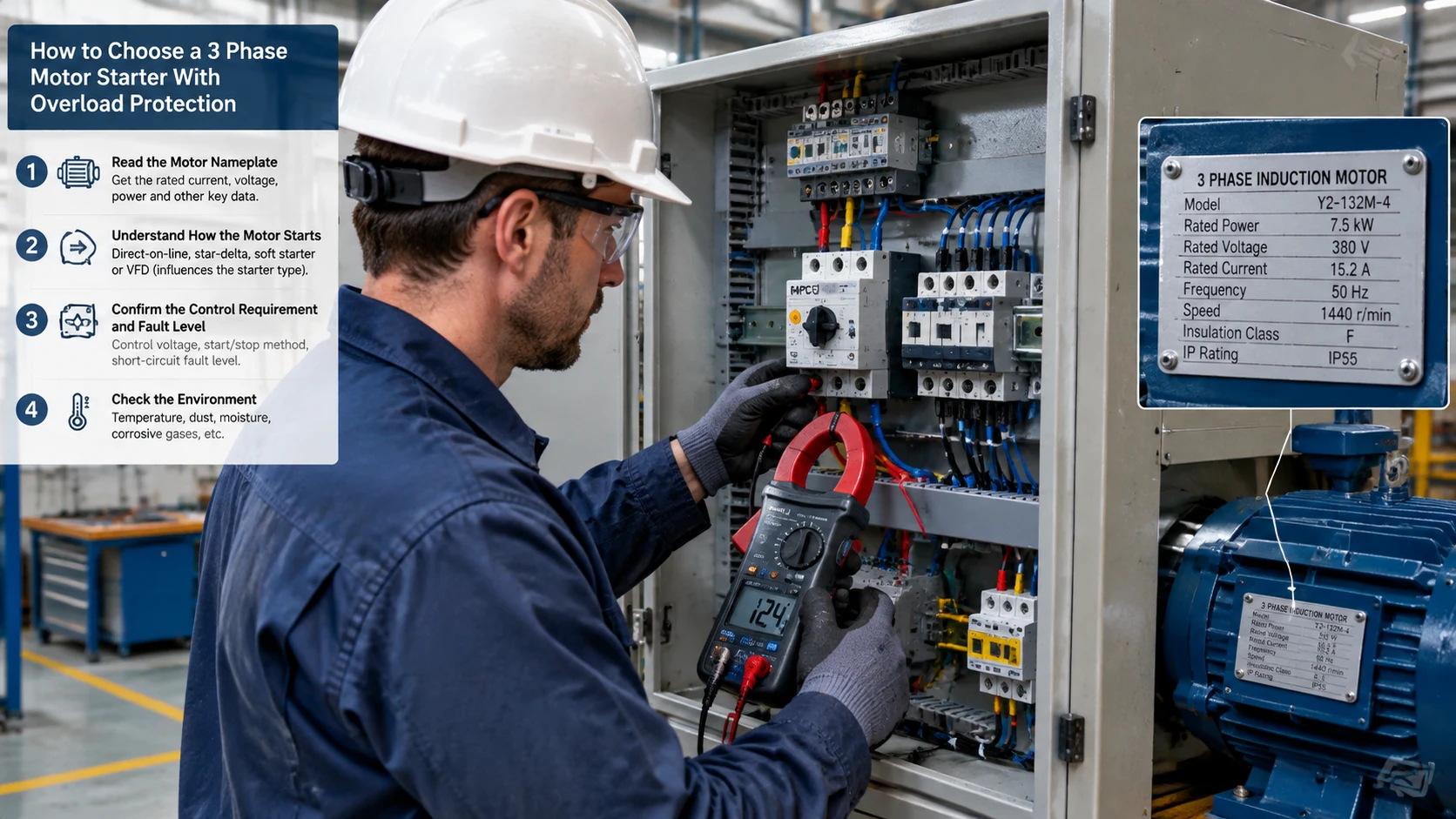
For a more detailed discussion of adjustable ranges, see how to select an MPCB for a 3-phase motor. Treat any example dial setting in a general article as illustrative; the final selection and setting must follow the exact device instructions and applicable installation requirements.
A useful inquiry contains more than a motor power figure. Send the motor nameplate or its rated voltage and full-load current; the application; the starting and control method; the available fault level if known; required quantity; destination market; and any needed data sheets, drawings, declarations, or tested combination information. If the panel already has a proposed contactor or starter drawing, include its model and control voltage.
This allows the supplier to identify an appropriate series, clarify missing specifications, and quote the right order code. For OEM or distribution orders, add your branding, packaging, and expected order quantity. Browse ZKELE motor protection circuit breakers and send your motor details for a model recommendation.
Some manual motor starters provide adjustable thermal overload protection along with other motor-circuit functions. Check the exact product documentation; the phrase “manual starter” alone does not establish which protection functions or ratings are included.
It depends on the required control method. A suitably rated device may be used for local manual operation where permitted. Add a compatible contactor when the application requires electrical, remote, or automatic switching, and verify the complete combination.
Use kW or HP as a preliminary reference, then check the motor’s nameplate full-load current at its rated voltage. Motors with similar power ratings can have different current values, so the final adjustable range cannot be selected from power alone.
No universal answer applies. Verify the chosen MPCB’s functions and ratings, the available fault current, the control circuit, the installation requirements, and any process-specific protection needed by the machine.
The right 3 phase motor starter with overload protection depends on how the motor is operated and what the complete circuit must withstand. Start with the nameplate and control requirements, compare the functional arrangements, and verify the actual product and combination ratings. For a suitable MPCB series or order code, review ZKELE’s product range and send your motor details for confirmation.