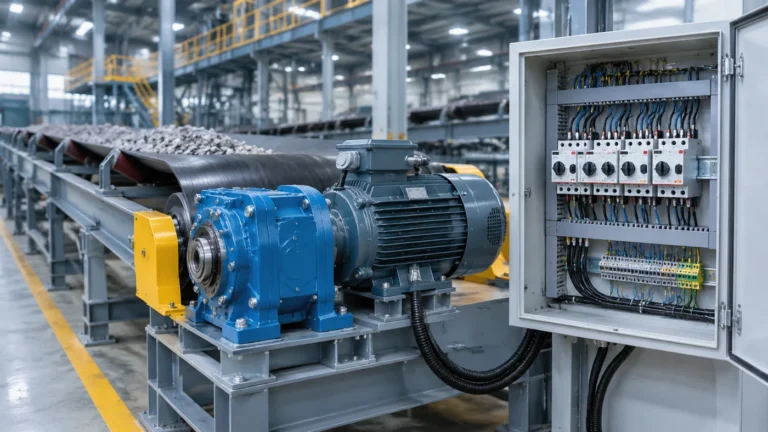
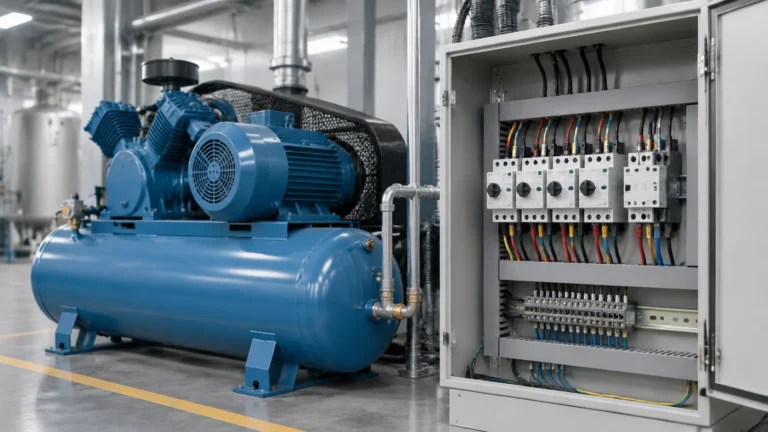
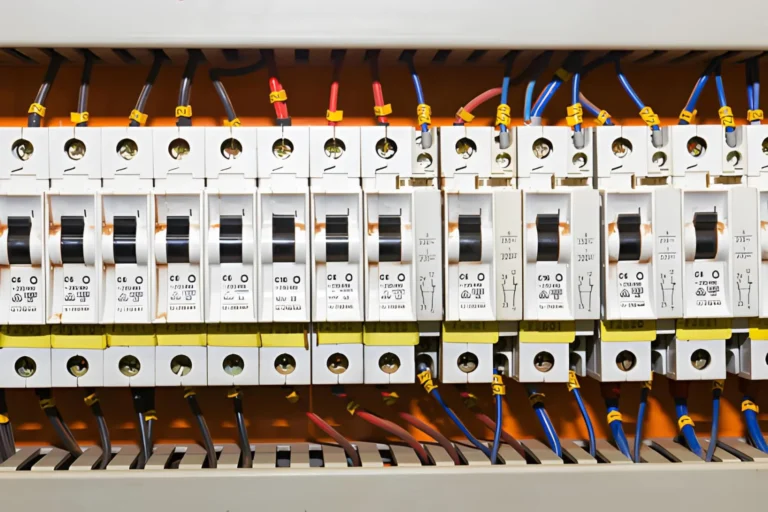
How to Select Motor Protection for Conveyor Systems
Conveyor motor protection depends on more than rated power. Learn how to assess starting load, belt jams, motor current, drive arrangements and protection coordination.
Read More
HVAC fans are used in air handling units, ventilation systems, exhaust systems, cooling equipment and commercial building services. Although these applications all move air, their motors may operate under different loads, control methods and duty cycles. Selecting an appropriate motor protection circuit breaker (MPCB) therefore requires more than matching the motor’s kilowatt rating to a catalogue range.
An HVAC fan may run continuously, start and stop according to a building management system, operate at variable speed, or use a belt-driven arrangement. Some modern fan assemblies also use electronically commutated (EC) motors with integrated electronic controls. Each arrangement needs to be assessed according to the motor and equipment manufacturer’s instructions.
This guide explains the main checks that HVAC equipment OEMs, electrical panel builders, system integrators and maintenance teams should make when evaluating an MPCB for HVAC fan motor applications.
An MPCB is a motor-circuit device that provides the switching and protection functions stated in its product documentation. Depending on the exact model, these commonly include adjustable thermal overload protection and magnetic short-circuit protection. The current adjustment range, rated operational voltage, breaking capacity, pole configuration and other functions must be checked against the selected model’s datasheet. For a general definition of what a motor protection circuit breaker does, see the overview article; the checks below are specific to HVAC fans.
In an HVAC installation, the MPCB is part of the electrical motor branch circuit. It does not measure airflow, maintain duct pressure, detect every fan imbalance or replace the building management system (BMS). It also does not replace fire alarm logic, smoke-control strategy, emergency shutdown circuits or other required life-safety functions.
Where remote or automatic fan control is required, a contactor, VFD, soft starter or integrated motor controller may be part of the arrangement. The protective device must be selected as part of the complete circuit, not as an isolated component.
Start by identifying the fan type and its role in the HVAC system. The fan’s mechanical design and operating point influence the motor load and the way the system is controlled.
Common HVAC fan applications include:
Record whether the fan is designed for continuous operation, scheduled operation, frequent cycling or demand-based speed control. Also identify the expected operating hours, start frequency, control sequence and any minimum run or stop times specified by the equipment manufacturer.
The motor nameplate is the primary source for the electrical data needed to assess the protection device. Use the rated current for the actual supply voltage and motor connection. Do not choose an MPCB solely from motor power in kW or horsepower.
Collect at least the following information:
The selected MPCB must have a documented adjustable current range that includes the required motor setting. Set the device according to the motor and MPCB manufacturers’ instructions and the electrical requirements applicable to the installation. Do not apply a universal percentage or setting multiplier to every HVAC fan motor.
For general model-range information, refer to the ZK-ELE MPCB rating and selection chart. Confirm the latest datasheet and exact order code before specifying or ordering a device. For the general current-range selection process rather than fan-specific duty, see the MPCB selection guide for three-phase motors.
In a direct-drive arrangement, the motor is coupled directly to the fan or integrated into the fan assembly. Check the motor’s rated current, speed, operating range and starting method. If the fan uses an integrated electronic controller or EC motor, follow the equipment manufacturer’s specified input protection and do not assume that a conventional MPCB provides the motor’s internal electronic protection.
For a belt-driven fan, the motor drives the fan through a belt and pulley system. In addition to the motor’s electrical data, check the fan and drive manufacturer’s requirements for pulley ratio, belt tension, alignment and permitted operating speed. Mechanical faults such as belt slip, excessive friction or bearing problems may affect operation, but they are not all reliably identified by an MPCB.
Where belt condition or fan rotation must be monitored, the system may require separate belt-slip, rotation, vibration or airflow monitoring devices. These should be selected as part of the HVAC control and maintenance strategy.
The starting and speed-control method affects the motor current profile and the position of protective devices. Confirm the actual circuit design before specifying an MPCB.
For DOL starting, review the motor’s starting current and acceleration time. If a contactor is used for remote or automatic control, verify the MPCB-contactor combination and the manufacturer’s coordination information for the exact devices.
A soft starter controls motor acceleration according to its configuration. Follow its manufacturer’s instructions for upstream protection, overload functions, bypass arrangements and permitted protective-device combinations. Do not assume that an MPCB can be installed at any point in the circuit.
Many HVAC fans use VFDs to adjust airflow according to system demand. The VFD manufacturer’s documentation must define the required input-side protection and any permitted output-side devices. Do not install a conventional MPCB on a VFD output unless the drive manufacturer explicitly permits that arrangement and provides application guidance.
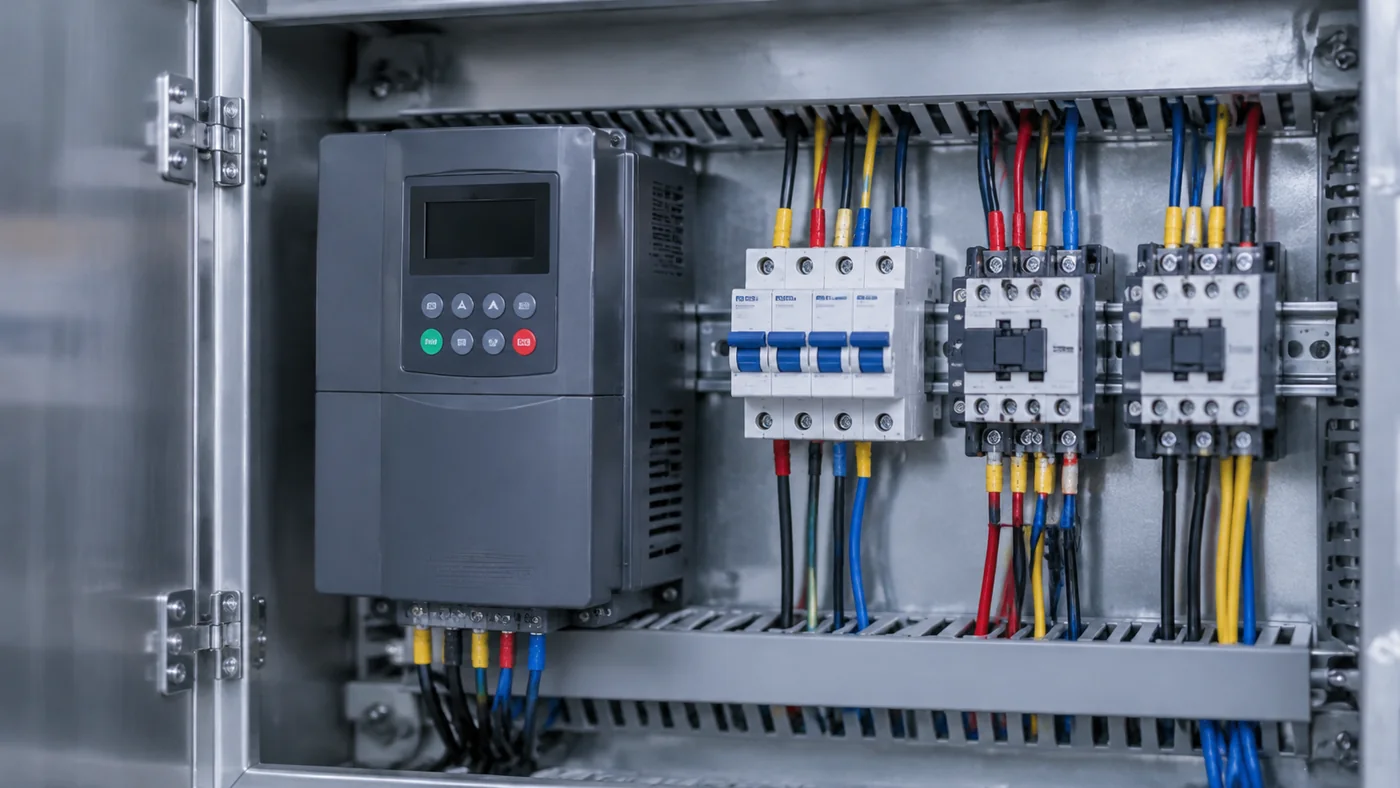
An EC fan may include integrated electronic commutation and motor control. Its protection requirements can differ from those of a conventional three-phase induction motor. Use the fan or motor manufacturer’s specified circuit protection, and confirm whether an external MPCB is required, permitted and correctly located.
An MPCB responds to the electrical conditions and protection characteristics defined by its design. It should not be treated as a general-purpose HVAC fault detector.
| Condition | Possible protection or monitoring approach | Important limitation |
|---|---|---|
| Motor overload | MPCB thermal overload function, if specified for the model | Setting and trip behavior must match motor data and manufacturer instructions. |
| Short circuit | MPCB magnetic protection, subject to documented breaking capacity | Verify prospective fault current and system voltage at the installation point. |
| Fan imbalance or bearing vibration | Vibration monitoring or equipment-specific sensors | An MPCB is not a vibration monitor. |
| Low airflow or blocked filter | Differential-pressure, airflow or system monitoring, as appropriate | The motor-current response depends on fan type and system operating point. |
| Belt slip or fan rotation failure | Belt-slip, rotation or speed monitoring | Do not assume current protection will detect every belt or rotation fault. |
| Fire or smoke-control operation | Approved fire/smoke control system and specified electrical arrangement | Life-safety systems require project-specific engineering and applicable local codes. |
This separation is important: motor-circuit protection, HVAC process monitoring and machine or building safety functions have different purposes. A complete design should assign each required fault-detection and shutdown function to the appropriate device or control system. For a comparison of the device types used in a motor branch, see motor overload protection devices.
Overload protection and short-circuit protection are separate engineering checks. Confirm the prospective short-circuit current at the point of installation and verify that the selected MPCB’s documented breaking capacity is suitable for the system voltage and fault level.
If the MPCB is used with a contactor and an upstream protective device, consult the manufacturer’s coordination tables for the exact combination. Check the required coordination type, voltage, current range and any specified upstream fuse or circuit breaker. Do not claim Type 1 or Type 2 coordination unless the combination is documented.
Also verify the contactor’s utilization category, rated operational current, control voltage and expected switching frequency. The complete panel design must follow the applicable installation requirements and equipment instructions.
HVAC equipment may be installed in plant rooms, rooftops, service corridors or outdoor enclosures. Review the ambient temperature, panel temperature rise, ventilation, dust or moisture exposure, vibration, mounting orientation, conductor sizing and terminal requirements.
If the enclosure is exposed to weather, washdown or corrosive conditions, verify the rating of the complete enclosure and its installed accessories. Do not transfer an enclosure IP rating to an individual MPCB or state a product environmental rating unless the relevant documentation supports it.
Before ordering, compare the motor requirements with the exact MPCB model and order code. Check its adjustable current range, rated operational voltage, breaking capacity, pole configuration, dimensions, terminal arrangement, mounting method and compatible accessories.
ZK-ELE lists GV2-M and GV3-M motor protection product families. Their current ranges and ratings are model-specific. Do not assume that every model in a family is suitable for every HVAC fan motor. Request the latest datasheet and confirm the intended application with the supplier.
Review the ZK-ELE motor protection circuit breakers range, the GV2-M manual starter and protector and the GV3-M manual motor starter, together with the relevant product documentation, before selecting a model.
| HVAC fan application | Key checks | Selection caution |
|---|---|---|
| Air handling unit supply fan | Motor nameplate, continuous duty, control sequence and VFD arrangement. | Confirm whether the fan motor is a conventional induction motor or an integrated EC assembly. |
| Return or exhaust fan | Operating schedule, starting frequency, environmental exposure and control method. | Check whether separate airflow, pressure or rotation monitoring is required. |
| Belt-driven ventilation fan | Motor current, pulley arrangement, belt condition and mechanical maintenance requirements. | MPCB protection does not replace belt-slip or vibration monitoring. |
| Roof or outdoor fan | Ambient conditions, enclosure protection, moisture exposure and service access. | Verify the complete enclosure and installation rating, not just the breaker. |
| Smoke-control or fire-related fan | Project fire strategy, approved equipment, control sequence and applicable local regulations. | Do not apply a generic MPCB recommendation; obtain a qualified life-safety design review. |
Selecting motor protection for an HVAC fan begins with identifying the fan and motor arrangement. Confirm the motor nameplate current, operating duty and starting method, then verify that the selected MPCB’s documented range and short-circuit rating suit the installation.
Direct-drive fans, belt-driven fans, VFD-controlled fans and EC assemblies can have different protection requirements. An MPCB is one part of the motor circuit; airflow monitoring, vibration detection, belt monitoring and fire or smoke-control functions must be addressed separately where required.
For HVAC equipment OEMs, panel builders and distributors, preparing the motor and control details before requesting a quotation helps the supplier identify the relevant product range and provide the correct technical documents.
An MPCB may be suitable for a conventional motor circuit when its documented current range, voltage, breaking capacity and other ratings match the application. Confirm the exact motor type and manufacturer instructions, especially for EC fans and integrated-drive assemblies.
Start with the motor nameplate current for the actual supply voltage and connection. Select a device whose documented adjustable range includes the required setting, then set it according to the motor and MPCB manufacturers’ instructions and applicable electrical requirements.
The required protection arrangement depends on the VFD design and manufacturer instructions. Verify the required input-side protection and whether any output-side protective device is permitted. Do not assume a conventional MPCB can be installed on every VFD output.
Not reliably as a dedicated airflow detector. The motor-current response depends on the fan type and system operating point. Use suitable differential-pressure, airflow or system monitoring where the application requires it.
EC fans often include integrated electronic motor control. Follow the fan manufacturer’s specified protection arrangement and confirm whether an external MPCB is required or permitted.
Provide the motor nameplate, supply voltage, rated current, motor type, fan type, starting method, VFD or controller details, operating duty, required quantity and destination market. Include the wiring diagram or equipment model where available.
Share your HVAC fan motor details and control arrangement with ZK-ELE. Our team can review the information, check the available MPCB models and confirm which product specifications and supporting documents are available for your requirement.
For a more accurate review, include: