How to Select an MPCB for an Industrial Mixer Motor
Published: Author: Rachel
Industrial mixers are used in food processing, chemical production, pharmaceuticals, cosmetics, coatings, construction materials and many other industries. Depending on the process, a mixer may handle low-viscosity liquids, thick pastes, powders, slurries or materials whose resistance changes during a batch.
These changing process conditions can affect the torque required from the motor. A mixer may start with an empty vessel, start with material already inside, or operate at different speeds as the batch develops. The motor may also drive an agitator through a gearbox, belt or coupling.
For this reason, selecting a motor protection circuit breaker (MPCB) for an industrial mixer motor requires more than matching motor power to a catalogue range. The motor nameplate, starting duty, material characteristics, drive arrangement and complete electrical design all need to be considered.
This guide explains the main checks that mixer OEMs, process-equipment manufacturers, electrical panel builders and maintenance teams should make before specifying an MPCB for a suitable conventional motor branch.
What Does an MPCB Do in an Industrial Mixer Circuit?
An MPCB is a motor-circuit device that provides the switching and protection functions stated in its technical documentation. Depending on the exact model, these commonly include an adjustable thermal overload function and magnetic short-circuit protection. The actual current adjustment range, rated voltage, breaking capacity, pole configuration and additional functions must be verified against the selected model’s datasheet.
In a mixer installation, an MPCB may be suitable for an individual conventional motor branch when the motor and circuit ratings match the device. It does not automatically detect every process problem, measure material viscosity, monitor gearbox temperature or replace mechanical torque limiters, process sensors, emergency-stop circuits or machine-safety systems.
Where the mixer uses remote control, automatic batch sequencing or variable-speed operation, the circuit may also include a contactor, soft starter, variable frequency drive (VFD) or dedicated motor controller. The MPCB’s function and location must be confirmed as part of the complete design.
1. Understand the Mixer Type and Process Material
Begin by identifying the mixer design and the material being processed. Different mixer types can create different load profiles and mechanical demands.
Common industrial mixer designs include:
Agitator and tank mixers for liquids and solutions
High-viscosity mixers for pastes, creams, adhesives or coatings
Ribbon and paddle mixers for powders and dry bulk materials
Planetary mixers for demanding paste and compound applications
High-shear mixers and dispersers used in process manufacturing
Record the material type, normal batch size, expected fill level, process temperature and whether viscosity changes during mixing. Where available, obtain the mixer manufacturer’s torque or load data for startup and normal operation.
Do not assume that a mixer handling a thick material always starts under maximum load. Some machines are designed to start empty and add material later; others are specifically designed to start with a loaded vessel. The actual process sequence is essential to device selection.
2. Review the Motor Nameplate and MPCB Current Range
For a conventional motor branch, use the motor nameplate as the primary source for rated electrical data. Record the rated current for the actual supply voltage and connection. Motor power alone is not sufficient to select the protective device.
Collect the following motor information:
Rated voltage and connection arrangement
Rated full-load current for the intended supply
Number of phases and supply frequency
Rated power and speed
Duty rating and service-factor information, if provided
Starting current and motor thermal data, where available
Select an MPCB whose documented adjustable current range includes the required motor setting. Set it according to the motor and device manufacturers’ instructions and the electrical requirements applicable to the installation. Do not apply one universal current-setting multiplier to every mixer motor.
The starting condition can be a major factor in a mixer application. The torque required to accelerate the motor and mixer depends on the mechanical design and the material inside the vessel. A loaded start may be more demanding than an empty start, but this must be confirmed from the equipment design rather than assumed.
Check the following:
Does the mixer start with an empty vessel, a partial batch or a full batch?
Does the material become more viscous as mixing proceeds?
What are the expected acceleration time and starting frequency?
Does the mixer use a gearbox, belt drive, direct coupling or another transmission?
Are there defined low-speed, high-speed, reversing or intermittent operating stages?
Does the equipment manufacturer specify a maximum starting torque or minimum acceleration time?
The selected protection arrangement must allow the motor to start under its documented normal conditions while still providing the required protection. Do not increase an overload setting simply to stop nuisance trips. Repeated trips may indicate excessive process load, a mechanical problem, incorrect operating sequence, unsuitable starting equipment or incorrect protection selection.
4. Consider the Gearbox, Agitator and Mechanical Transmission
Many industrial mixers use a gearbox to reduce speed and increase torque at the agitator shaft. Others use belts, chains, couplings or a direct-drive arrangement. These components influence the mechanical load seen by the motor.
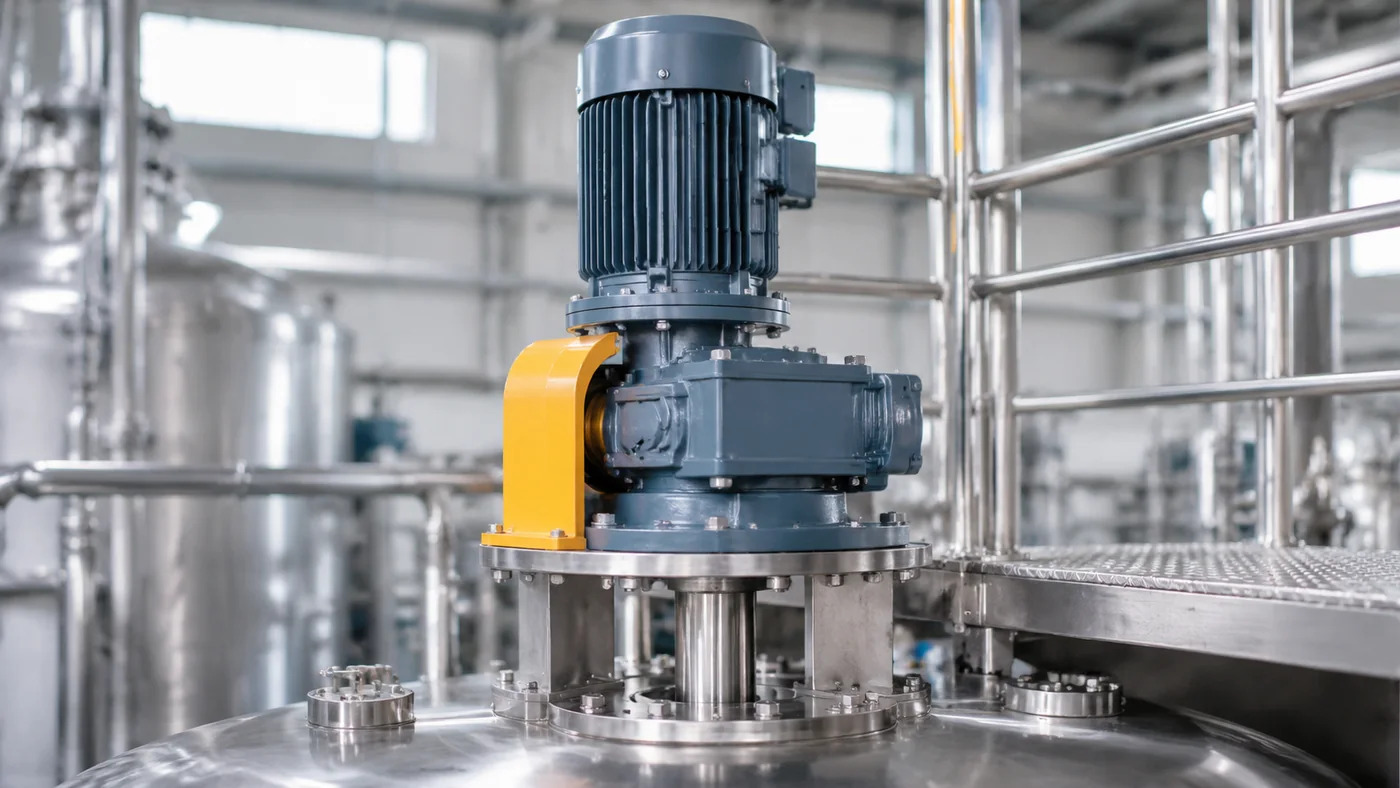
The drive train on top of a mixing vessel: motor, gearbox, coupling guard and agitator shaft. These parts set the mechanical load the motor protection has to allow for.
Confirm the gearbox ratio, rated output torque, permitted operating speed and the equipment manufacturer’s requirements. Check that the mixer is not being operated outside its specified mechanical limits. A jammed agitator, damaged bearing, misalignment or unsuitable material can create abnormal mechanical loading.
An MPCB may respond if the resulting motor current and operating conditions reach its trip characteristics, but it is not a dedicated torque or gearbox-condition monitor. Where the process requires reliable detection of shaft blockage, excessive torque, vibration or bearing temperature, use appropriate sensors or monitoring devices specified by the machine designer.
5. Check the Starting and Speed-Control Method
The electrical arrangement must be reviewed before selecting the MPCB. Industrial mixers may use direct-on-line starting, a soft starter or a VFD, depending on the motor, process and required speed control.
Direct-on-line (DOL) starting
For DOL starting, review the motor’s starting current, acceleration time and mechanical load. If a contactor is used for remote or automatic switching, verify the MPCB-contactor combination and the manufacturer’s coordination information for the exact devices; the three-phase motor starter with overload protection covers the wider starter arrangement.
Soft starter
A soft starter controls motor acceleration according to its configuration. Follow the soft-starter manufacturer’s instructions for upstream protection, overload functions, bypass arrangements and device coordination. Confirm that the selected combination is approved for the motor and mixer duty.
Variable frequency drive (VFD)
A VFD may be used to control mixer speed, manage acceleration or support different process stages. The VFD manufacturer’s documentation must define the required input-side protection and any permitted output-side devices. Do not install a conventional MPCB on a VFD output unless the drive manufacturer explicitly permits that arrangement and provides application guidance.
Where the VFD provides motor overload functions, confirm how those functions are configured and how external short-circuit protection is provided. Do not assume that the drive and an external MPCB duplicate or replace one another in every design.
6. Distinguish Motor Protection from Process and Machine Protection
A mixer can experience process faults that do not produce a predictable motor-current response. The protective strategy should assign each required detection task to the appropriate device. For a comparison of the device types used in a motor branch, see motor overload protection devices.
Condition
Possible detection or protection approach
Important limitation
Motor overload
MPCB thermal overload function, if documented for the selected model
Use the motor data and device instructions to determine the setting.
Short circuit
MPCB magnetic short-circuit protection, subject to documented breaking capacity
Verify the prospective fault current and system voltage.
Excessive shaft torque or agitator blockage
Torque monitoring, mechanical protection or process-specific sensing
Do not assume every blockage will cause a predictable MPCB trip.
Gearbox or bearing overheating
Temperature sensors or condition-monitoring equipment
An MPCB is not a gearbox or bearing temperature sensor.
Incorrect batch level or material feed
Level, weight, flow or process sensors as required
Motor current alone may not identify the process condition.
Operator access or entanglement hazard
Machine guarding, interlocks and safety-related control systems
An MPCB does not replace machine-safety functions.
For mixers handling combustible dust, flammable vapors or other potentially explosive atmospheres, the complete installation requires a qualified hazardous-area assessment. Do not assume that an ordinary MPCB or a standard control panel is suitable for installation within a classified hazardous location.
7. Verify Short-Circuit Capacity and Starter Coordination
Overload protection and short-circuit protection are separate design checks. Confirm the prospective short-circuit current at the installation point and verify that the selected MPCB’s documented breaking capacity is suitable for the system voltage and available fault level.
If the MPCB is paired with a contactor and an upstream protective device, consult the manufacturer’s coordination tables for the exact combination. Check the required coordination type, voltage, current range and any specified upstream fuse or circuit breaker. Do not claim Type 1 or Type 2 coordination unless the exact combination is documented.
Also verify the contactor’s utilization category, rated operational current, control voltage and switching frequency. The complete motor starter and panel design must follow applicable installation requirements and the manufacturers’ instructions.
8. Review the Installation Environment
Mixer installations can be located in food-processing rooms, chemical plants, production halls or washdown areas. Review ambient temperature, moisture, dust, corrosive exposure, vibration, panel ventilation, mounting orientation, conductor sizing and terminal requirements.
For hygienic or washdown environments, verify the protection rating of the complete enclosure and its installed components. Do not transfer an enclosure IP rating to an individual MPCB or state a product environmental rating unless the relevant product documentation supports it.
Where the process area is classified as hazardous, the equipment selection, installation location, enclosure and wiring method must be assessed against the applicable hazardous-area requirements by qualified personnel.
Industrial Mixer Motor Protection: Selection Checklist
Mixer type and process application
Material type, viscosity range, batch size and operating temperature
Whether the mixer starts empty, partially loaded or fully loaded
Motor nameplate photo and rated current at the actual supply voltage
Supply voltage, phase, frequency and motor connection
Starting method: DOL, soft starter or VFD
Expected starts per hour, acceleration time and operating duty
Gearbox ratio, transmission type and mixer operating speed
Required MPCB current range and exact model for the motor branch
Prospective short-circuit current and required breaking capacity
Contactor, upstream protection and coordination information
Torque, temperature, vibration, level or other process monitoring requirements
Installation environment and any hazardous-area classification
Quantity, destination market and technical documentation requirements
Conclusion
Selecting an MPCB for an industrial mixer motor begins with understanding the process and the motor’s actual operating conditions. Confirm the material and batch characteristics, starting sequence, motor nameplate current, transmission arrangement and starting method before selecting a device.
An MPCB may be appropriate for a correctly specified conventional motor branch, but it does not replace torque monitoring, process sensors, mechanical protection or machine-safety systems. For VFD-controlled mixers and installations in potentially hazardous areas, follow the drive manufacturer’s instructions and obtain a qualified engineering review.
For mixer OEMs, process-equipment manufacturers, panel builders and distributors, preparing the motor nameplate and process details before requesting a quotation helps the supplier review the available MPCB models and identify the technical documents needed for the application.
Frequently Asked Questions
Can an MPCB be used for an industrial mixer motor?
An MPCB may be suitable for an individual conventional motor branch when its documented current range, voltage, breaking capacity and other ratings match the application. The complete mixer design may also require separate process, mechanical and machine-safety devices.
Does a mixer motor need a higher-rated MPCB because it handles viscous material?
Not automatically. Material viscosity can affect the mechanical load and starting conditions, but the device must be selected using the motor nameplate, actual starting duty, circuit fault level and manufacturer instructions. Do not oversize or increase the setting without an engineering basis.
Can an MPCB protect a mixer that starts with material in the tank?
It may be used if the motor branch and starting conditions are compatible with the device’s documented characteristics. Confirm the loaded-start torque, acceleration time and starting current with the mixer and motor manufacturers before specifying the protection.
Can an MPCB detect when a mixer agitator is jammed?
It may trip if the resulting motor current and duration reach its trip characteristics, but not every mechanical blockage produces the same electrical response. Use torque, speed or process monitoring where reliable jam detection is required.
Can an MPCB be used with a VFD-controlled mixer motor?
The permitted protective device and its location depend on the VFD manufacturer’s instructions. Verify the required input-side protection and whether any output-side device is allowed. Do not assume a conventional MPCB can be installed on every VFD output.
What information should I send a supplier for an industrial mixer MPCB recommendation?
Provide the motor nameplate, rated current, supply voltage, mixer type, material and batch conditions, whether the mixer starts loaded, starting method, VFD details, gearbox or transmission information, quantity and destination market.
Need Motor Protection for Your Industrial Mixer?
Share your mixer motor details and process conditions with ZK-ELE. Our team can review the information, check the available MPCB models for a suitable motor branch and confirm which product specifications and supporting documents are available for your project.
For a more accurate review, include:
Motor nameplate photo and rated current
Mixer type, material and batch conditions
Whether the machine starts empty or loaded
Starting method and VFD or soft-starter details
Gearbox or transmission information
Required quantity and destination country
OEM branding, packaging or documentation requirements, if applicable
The model families are listed under motor protection circuit breakers; confirm the exact order code and datasheet for the motor branch you are protecting.
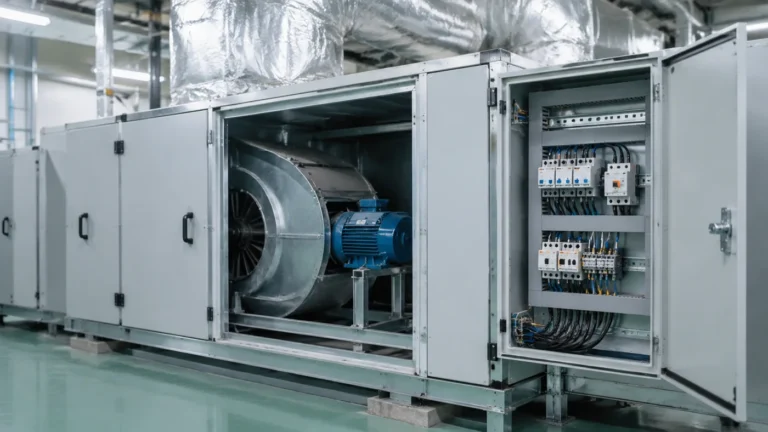
Selecting motor protection for an HVAC fan requires more than matching motor power. Learn how to check fan type, motor current, starting method, VFD requirements and control-panel coordination.
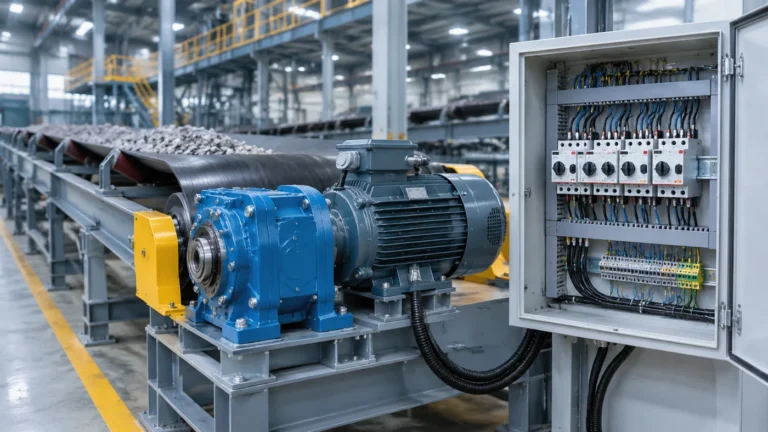
Conveyor motor protection depends on more than rated power. Learn how to assess starting load, belt jams, motor current, drive arrangements and protection coordination.
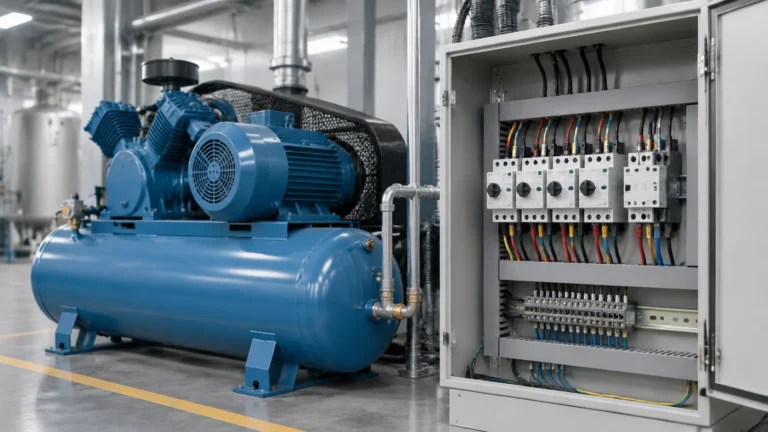
Choosing an MPCB for an air compressor motor involves more than matching kilowatts. Learn how to check motor nameplate current, starting conditions, unloading arrangements, short-circuit ratings and starter coordination.