3-Phase Motor Full Load Current Chart (400 V / 415 V)
Full load current chart for standard 3-phase motors, 0.37-75 kW at 400 V and 415 V - with overload setting and the recommended MPCB model for each rating.
Read More
Protecting a water pump motor from overload starts with matching an overload protection device to the motor’s nameplate current — normally an MPCB (motor protection circuit breaker) or a thermal overload relay — and then removing the pump-side causes that push the motor past its rating: blocked lines, dry running, mismatched duty, and unstable supply voltage.
This guide explains why pump motors overload, how to select and set an MPCB for pump duty, which pump-specific protections to add, and how to troubleshoot nuisance tripping.
Overload means the motor is drawing more current than its rating for longer than it can tolerate, which heats the windings and eventually destroys the insulation. On a pump, the most common causes are:
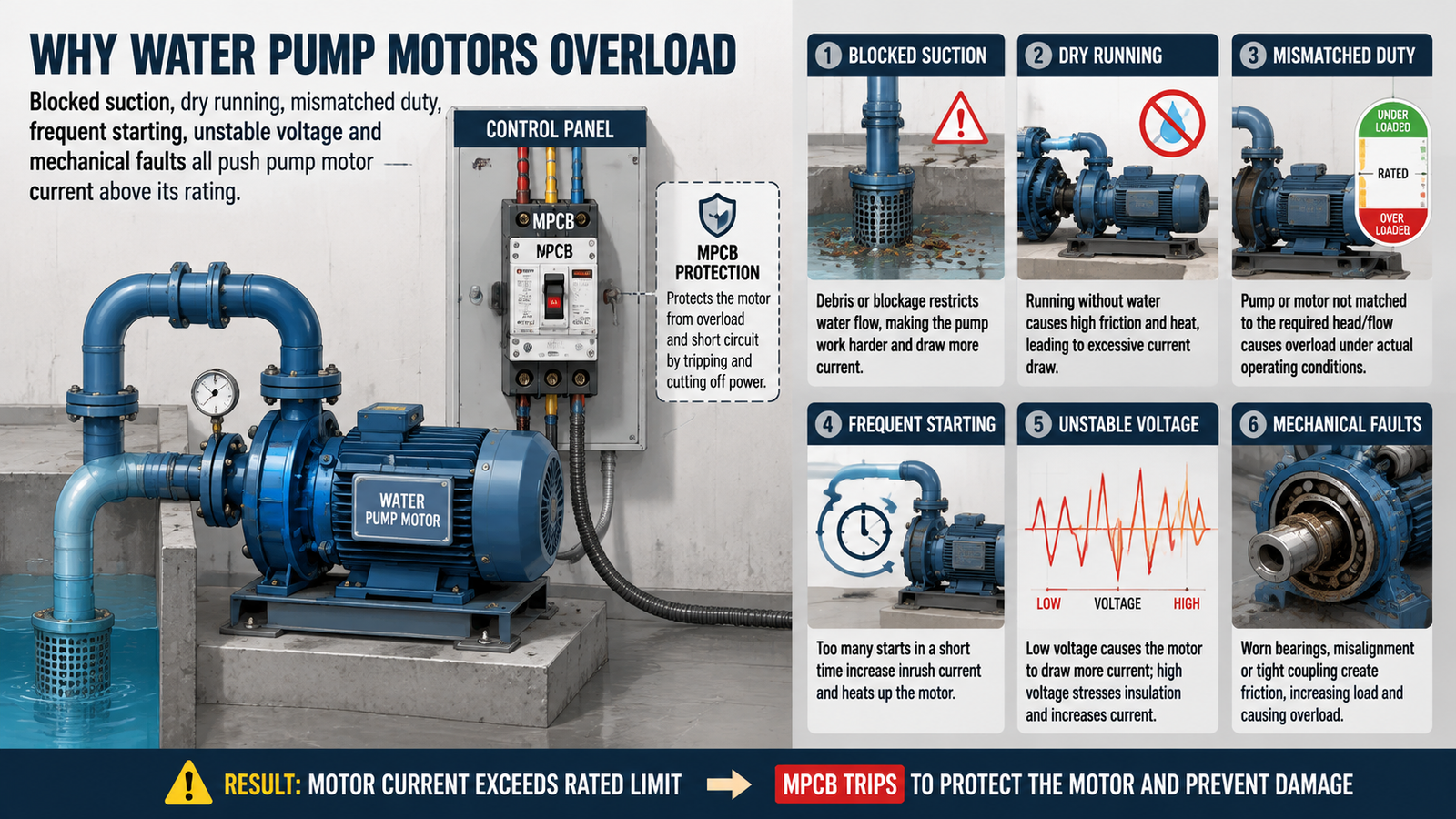
A sustained overload drives the winding temperature above the insulation class rating. The result is progressive insulation degradation, and eventually a shorted or burned-out winding that usually means a full motor replacement. Overload can also damage the pump itself — seals and bearings fail early when the motor labours against a blocked or misaligned load. Because a pump motor is often below ground, in a pit, or otherwise hard to access, the cost of failure includes downtime and replacement labour, not just the motor price.
An MPCB is a good fit for pump duty because it combines the three protections a pump motor needs most in one compact device:
An MPCB replaces the separate fuse or MCB plus thermal overload relay combination on a single pump branch. If you are weighing the two options, MPCB vs thermal overload relay compares them in detail.
Selection follows the same rules as any three-phase motor, described fully in how to select an MPCB for a 3-phase motor:
For the difference between an MPCB and other breaker types on motor duty, see MPCB vs MCB vs MCCB.
An MPCB handles electrical overload, but a pump also needs protection against conditions that are unique to pumping:
For outdoor, pit, or washdown installations, house the MPCB and controls in a suitable enclosure — see our IP67 waterproof MCB distribution box for wet environments.
If the MPCB trips during normal pump operation, work through these before changing any setting:
Do not raise the overload setting to silence trips — that removes the protection. Fix the cause instead. General guidance on the background is in electric motor overload protection.
Yes. A pump motor without overload protection can burn out from a blocked line, dry run, or voltage problem. Use an MPCB or a contactor plus thermal overload relay.
An MCB protects the cable, not the motor. Its fixed curve either trips during starting or leaves the winding underprotected. Use an MPCB for pump duty.
Match the adjustable range to the motor nameplate FLA, ideally near the middle of the dial. For example, a 5.5 kW (7.5 HP) 400 V pump motor draws about 10–11 A and suits a 9–14 A range set around 12 A.
Likely a genuine overload — blocked suction, dry run, low voltage, or an overworked duty point. Measure running current with a clamp meter; it should be within the motor rating.
Submersible motors benefit from PTC thermistor wiring to the starter, dry-run protection, and correct breaking capacity for the borehole fault level — plus the same MPCB overload protection as any pump motor.
Protecting a water pump motor from overload means three things: removing pump-side causes (blockage, dry running, mismatched duty, unstable voltage), fitting the right MPCB matched to the motor FLA, and adding pump-specific protections such as dry-run switching and thermistor monitoring. Set the dial to the nameplate current, verify with a clamp meter, and never raise the setting to mask a problem.
Need an MPCB for your pump motor? Browse the GV2-M manual motor starter range or contact us with your motor nameplate data for a recommendation.